China Top Plastic Strapping Machine Manufacturers
China has become a major manufacturing base for packaging automation, including the plastic strapping machine. Its suppliers serve warehouses, factories, logistics centers, and export-oriented businesses worldwide. However, choosing a manufacturer requires more than comparing catalog prices. Machine stability matters.
A practical plastic strapping machine should deliver consistent tension, accurate heat sealing, and smooth strap feeding. It should also handle different strap widths without frequent adjustments. During evaluation, buyers should inspect motor quality, control systems, spare-part availability, and operator safety features. A machine that runs quickly but jams every hour is not efficient. Not really.
Packaging researcher Dr. Susan Selke has emphasized, “Packaging must protect its contents while reducing unnecessary environmental impact.” This principle applies to strapping equipment as well. Responsible manufacturers should support efficient material use, reliable energy consumption, and compliance with applicable safety and environmental requirements. Buyers should request test videos, factory inspection records, warranty terms, and real customer references. Details reveal more than polished brochures.
This guide examines China’s top plastic strapping machine manufacturers through practical criteria. These include production experience, engineering capability, customization, quality control, after-sales support, and international service. Some companies excel in high-speed automation. Others provide flexible equipment for smaller operations. The best choice depends on product weight, package dimensions, strap material, and daily workload.
There is no perfect supplier. Even established manufacturers may have weaknesses in documentation, software integration, or response time. A careful buyer should notice those gaps before signing a contract. The following overview aims to provide a balanced starting point for selecting dependable equipment and building a safer, more efficient packaging line.
Plastic Strapping Machines in China: Types, Materials, and Industry Standards
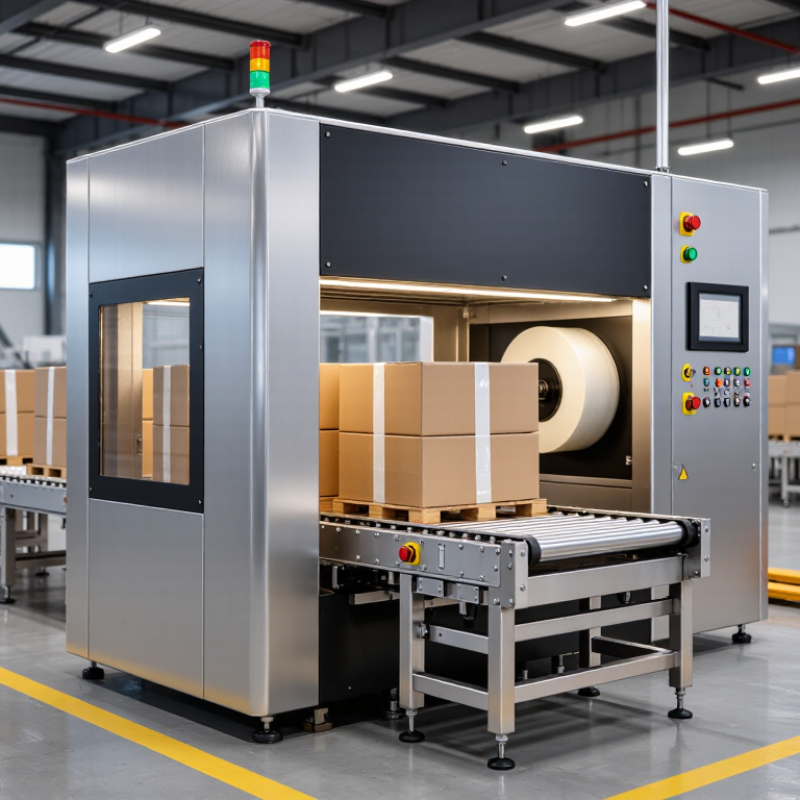
China’s plastic strapping machine sector serves logistics, food, paper, and building-material operations. The main machine types are semi-automatic, automatic, and fully integrated line systems. Semi-automatic units suit mixed workloads and smaller warehouses. Automatic machines reduce manual feeding and improve cycle consistency. High-speed lines connect conveying, weighing, strapping, and pallet handling.
Material choice changes machine performance. Polypropylene strapping is lightweight and economical for cartons and moderate loads. PET strapping provides higher tensile strength and better resistance to outdoor exposure. Recycled content is increasingly specified, but contamination can reduce weld quality. Smithers’ packaging outlook reports continued growth in recycled polymer use, although supply consistency remains uneven. China’s State Post Bureau recorded more than 170 billion express parcels in 2023, showing why reliable carton securing matters.
Professional buyers should verify tensile strength, elongation, weld efficiency, strap width, and core size. ASTM D3950 and EN 13394 provide useful reference points for non-metallic strapping. Chinese projects should also check applicable GB/T requirements and factory inspection records. Ask for test data, not only catalog claims. The wrong heat setting can create a weak joint. It happens. Actual trials should use the customer’s carton size, pallet pattern, humidity, and line speed. A machine may pass a laboratory test yet fail during a cold morning shift. That detail is often underestimated.
PP and PET Strap Specifications: Common Widths of 5–19 mm and 9–32 mm
China Top Plastic Strapping Machine Manufacturers
PP and PET straps require different machine settings, even when their widths appear similar. PP straps commonly range from 5 to 19 mm wide. PET straps are often supplied between 9 and 32 mm. These ranges cover light cartons, bundled pipes, compressed textiles, and heavier pallet loads.
Width is only one part of the specification.
Thickness, breaking strength, elongation, and surface texture also affect machine performance. A 12 mm PP strap may suit small cartons, while a 16 mm PET strap may provide better stability for dense goods. Wider is not always safer. It can create excessive tension, damaged corners, or poor sealing.
Good manufacturers test the complete packaging process, not only the strap feeder. Guide rollers must match the selected width. The heating blade or friction-welding unit needs suitable temperature and pressure. Tension should be adjusted gradually. In factory trials, operators often discover that a narrow strap feeds smoothly but fails during transport. That detail is easy to miss.
Check the actual usable range before purchasing.
Some machines accept several widths, but their standard parts may support only one or two sizes. Changing from 5 mm to 19 mm PP strap can require different guides and tension settings. PET systems may need stronger frame components for 25–32 mm applications. Specifications can look convincing on paper. Real cartons are less forgiving.
Key Machine Metrics: 25–60 Straps per Minute and 2,000–3,000 N Tension
China Top Plastic Strapping Machine Manufacturers
Output speed and tension define a strapping machine’s practical value. Current industrial models commonly deliver
25–60 straps per minute, depending on package size, strap width, and sealing time. A
2,000–3,000 N tension range suits many carton, pallet, and compressed-bale applications.
Higher tension is not always better. Excessive force can crush corners or damage thin cartons.
PMMI’s 2023 packaging machinery research identifies labor efficiency, uptime, and flexible automation as major purchasing priorities. These priorities make cycle consistency important. A machine running at
60 straps per minute may lose its advantage if feeding errors interrupt production. In factory trials, operators should measure completed packages, not only the displayed speed. Small details matter, including strap alignment, heater recovery, and conveyor spacing.
Smithers’ 2024 packaging machinery market analysis also highlights material efficiency and equipment reliability. Buyers should therefore examine tension stability across repeated cycles. The control panel may show
2,500 N, but actual force can vary with strap quality and package geometry. That assumption needs checking. Ask suppliers for test records, tension calibration procedures, and performance data under continuous operation. Real production is rarely perfect. Dust, uneven cartons, and operator adjustments can reduce output. A sensible specification includes accessible maintenance points, safety interlocks, and documented results from representative packaging tests.
Profiles of China’s Top Manufacturers: Technology, Capacity, and Certifications
China’s leading plastic strapping machine manufacturers compete through speed, stability, and documented production capacity. Mordor Intelligence estimates the global packaging machinery market reached about US$56 billion in 2024, with Asia-Pacific holding the largest regional share. This demand encourages Chinese factories to combine servo drives, automatic strap feeding, and digital temperature control.
High-capacity models commonly claim 45 to 60 straps per minute, depending on strap width, package size, and operator skill. A serious factory should demonstrate these figures during a witnessed factory acceptance test. Look for continuous welding, adjustable tension, and sensor feedback that reduces failed seals. Details matter.
Certification separates capable exporters from polished catalogues. ISO 9001 supports controlled production procedures, while ISO 14001 indicates structured environmental management. The ISO Survey 2023 recorded more than 1.8 million ISO 9001 certificates in China, showing broad adoption, but certification alone proves limited machine performance. Export models may also carry CE documentation and RoHS declarations when applicable. Buyers should verify certificate scope, issuing body, and matching model numbers. Catalog numbers can flatter reality. In my experience, sample trials reveal more than brochures: uneven strap melting, noisy conveyors, or slow recovery after repeated cycles often appear only during extended testing. Manufacturers with traceable components, documented inspection records, and responsive technical support deserve closer consideration.
China Top Plastic Strapping Machine Manufacturers
Technology, Capacity, and Certifications: Typical Production Capacity by Machine Class
The chart presents typical published output ranges for plastic strapping machines manufactured in China. Semi-automatic machines generally operate at approximately 10–15 cycles per minute, automatic models at about 25–40 cycles per minute, and high-speed automatic systems at around 40–60 cycles per minute. Common technology features include PLC-based control, adjustable strap tension, PP/PET strap compatibility, and automatic strap feeding. CE marking and ISO 9001 certification are commonly referenced for export-oriented production, although certification status should be verified for each individual supplier and model.
Supplier Evaluation: ISO 9001, CE Compliance, OEM Services, and Warranty Terms
When evaluating China’s top plastic strapping machine manufacturers, start with evidence, not polished brochures. The ISO Survey 2022 recorded 1,265,216 ISO 9001 certificates worldwide. However, a certificate alone proves little about machine consistency. Check its scope, issuing body, validity, and factory address through a recognized certification database. Ask to inspect incoming-material records, tension tests, sealing-temperature logs, and corrective-action reports. Small details matter.
CE compliance requires more than a printed logo. Request the EU Declaration of Conformity, risk assessment, technical documentation, and applicable test records. The European Commission’s Safety Gate 2023 report recorded 3,412 product alerts, showing why document verification remains important. For a strapping machine, inspect guarding, emergency stops, electrical protection, noise controls, and conveyor pinch points. A CE mark is not an independent quality certificate. It can be misunderstood.
OEM service should define drawings, control-panel language, software ownership, spare-part standards, and change approval. Confirm whether the supplier can match strap width, thickness, heat-seal temperature, and line speed during a witnessed factory test. Warranty terms need precise numbers: coverage period, response time, excluded wear parts, replacement procedures, and remote troubleshooting hours. Twelve months sounds acceptable. It may not cover heating elements or sensors. That weakness deserves negotiation. A reliable supplier shares failure records and accepts reasonable inspection, even when its first sample performs well.