How to Choose the Right Plastic Strapping Machine?
Choosing the right plastic strapping machine is not simply a matter of comparing prices. It requires a clear understanding of your products, packaging speed, strap material, and working environment. A machine designed for light cartons may struggle with heavy boxes or uneven loads. That mistake can create loose straps, damaged corners, and repeated production delays. Start with the load.
In practical packaging operations, I have found that strap width, tension control, sealing quality, and machine cycle time deserve close attention. Polypropylene and polyester straps behave differently under pressure and heat. Your supplier should explain these differences clearly and provide test results, service details, and realistic output figures. Watch the machine run.
The best plastic strapping machine should fit your existing conveyor, operator skills, floor space, and maintenance routine. Automatic models may improve consistency, while semi-automatic units can suit smaller production lines. Neither option is universally better. A fast machine may become expensive if spare parts are difficult to obtain or adjustments require specialist support.
Look beyond the brochure. Ask how the machine performs after months of daily use, not only during a short demonstration. Check emergency controls, guarding, electrical requirements, and cleaning access. Reliable manufacturers will discuss limitations instead of promising perfect results. That honesty matters.
Your final decision should come from measured trials and documented requirements. Test your actual cartons, strap tension, and production rhythm before purchasing. Even careful planning can miss something. Review the choice with operators and maintenance staff. Their experience often reveals practical problems that specifications cannot show.
Define Load and Throughput Needs: Typical Speeds Reach 20–60 Straps/Minute
How to Choose the Right Plastic Strapping Machine?
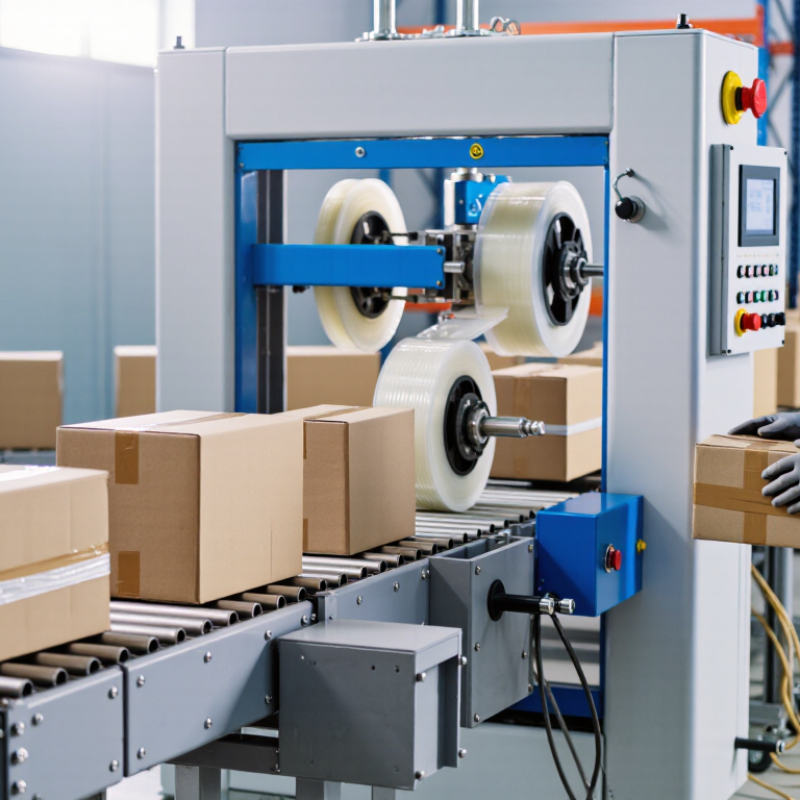
Define load and throughput needs before comparing machine models. Typical strapping speeds reach 20–60 straps per minute, but speed alone can mislead. A small carton line may need only 25 straps per minute, while a pallet station handling heavy loads may require 40 or more. Record carton dimensions, strap positions, load weight, and peak hourly output for one week. Real production data is more useful than a supplier’s headline number.
PMMI’s 2024 State of the Industry report identifies labor availability and operational efficiency as major drivers of packaging automation. Smithers also forecasts continued global packaging growth, with the market expected to exceed 1.2 trillion dollars during the decade. These trends support faster equipment, but they do not justify oversizing every machine. A 60-strap-per-minute unit may waste energy and floor space if upstream equipment supplies only 20 loads per minute.
Check actual cycle time, not only the rated maximum. Allow for strap feeding, sealing, cutting, operator movement, and occasional rework. A practical test should run your heaviest and most unstable load. Measure failed seals too. This part is often overlooked. Consider automatic tension control, accessible maintenance points, and compatibility with your strap width. My own rule is simple: select enough capacity for peak demand, then leave a modest margin. Too much margin can become an expensive mistake.
How to Choose the Right Plastic Strapping Machine?
Define load and throughput needs before selecting a machine. Typical strapping speeds range from 20 to 60 straps per minute. The hourly figures below represent theoretical throughput based on continuous operation and do not account for loading delays, product variation, or machine downtime.
Choose PP or PET Strap: Match 5–19 mm Width to Product Requirements
Choosing a plastic strapping machine starts with the strap, not the machine’s speed.
For light cartons, PP strap between 5 and 12 mm often provides practical flexibility. It bends around uneven edges and seals with moderate heat. For heavier loads, PET strap from 12 to 19 mm offers higher tensile strength and better shape retention. That difference matters when pallets travel over rough floors or remain in storage. Measure the product first.
A 5 mm strap may suit small bundles, but it can feel weak on wide cartons. A 19 mm strap may waste material on compact packages and require stronger guides. I have seen operators choose width by habit, then adjust tension repeatedly. That is a warning sign. Check package weight, corner hardness, surface texture, and expected transport vibration. Then match the machine’s strap channel, sealing method, tension range, and feed speed. A machine designed for PP may not handle PET reliably, even when widths appear similar. Ask for a test with your actual cartons.
During trials, inspect seal strength, strap alignment, and package marks. Run several cycles, not one perfect demonstration. PET usually needs firmer tension control, while PP can tolerate more flexing. Still, settings depend on temperature, strap quality, and operator technique. Record failures honestly. A loose seal, melted edge, or slipping strap reveals a mismatch. The fastest model is not always the right model. Choose the machine that consistently handles the selected 5–19 mm width without damaging the load.
Set Tension and Sealing: Verify Adjustable Forces of 100–700 N
Choosing the right plastic strapping machine starts with controlled tension and reliable sealing. An adjustable range of 100–700 N covers many packaging tasks. Light cartons need less force. Heavy loads need more stability. Excessive tension can crush edges, deform products, or weaken the strap. Insufficient tension allows movement during handling.
I check the strap width, thickness, and material before setting the machine. The package also matters. A rigid crate tolerates more force than a soft carton. I place a test load cell near the strap when possible. This helps verify whether the displayed setting matches the real force. A reading of 500 N should not be accepted without checking. Small calibration errors can become expensive over many packages.
Sealing force deserves equal attention. The jaws must press firmly, but they should not flatten or cut the strap. I run several sample cycles at different settings, then inspect the joint by hand and with a pull test. A clean seal can still hide weak bonding. This happened to me when the strap surface was dusty. The machine looked correctly adjusted, but the joint failed later. Temperature, pressure, and cooling time may need separate adjustments. I record each trial beside the package type. My records are useful, though not perfect. Operators can still apply force unevenly. Regular checks keep those mistakes visible.
Compare Machine Types by Automation Level, Cycle Time, and Labor Needs
Choosing a plastic strapping machine starts with the work, not the equipment brochure. A manual machine may suit a small packing area with irregular orders. It costs less, but operators must position the strap, tension it, and seal each package. Labor demand stays high. Cycle times can vary sharply between workers.
Semi-automatic equipment reduces several manual steps. The operator places the carton, guides the strap, and starts the cycle. A typical bundle may take 10 to 20 seconds, depending on strap placement and package size. This option often fits warehouses handling steady, moderate volumes. It still needs trained staff. That detail is easy to overlook.
Automatic machines reduce hand movements further. Sensors detect the load, then the machine feeds, tensions, seals, and cuts the strap. Cycle time may fall below 10 seconds on consistent cartons. Labor shifts toward loading, inspection, and replenishing strap coils. Measure actual throughput during busy periods, not only ideal test runs. My early estimates were too optimistic because I ignored uneven carton sizes and short operator breaks. A spreadsheet can mislead. Watch the line for one full shift. Record stoppages, rework, and operator movement. Then compare labor hours saved against installation, maintenance, and training needs. Faster is not always better if the machine creates jams or requires constant adjustment.