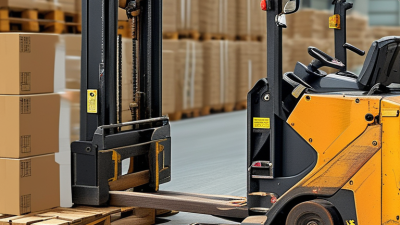




7 Best Pallet Banding Machines for Global Buyers?
Choosing the right pallet banding machine can improve load stability, packing speed, and workplace consistency. Yet, global buyers face many variables before approving a purchase. Pallet dimensions, strap material, production volume, operator skills, and available floor space all affect the final decision.
This guide reviews seven pallet banding machine options for warehouses, manufacturers, and logistics providers. Each option is considered through practical criteria, including banding speed, tension control, sealing quality, adjustment range, maintenance access, and energy use. A machine that handles a standard 1200 × 1000 millimeter pallet may struggle with irregular loads. That detail matters. Operators should also inspect how easily the machine accepts different strap widths and how securely it protects corners.
Real-world performance deserves more attention than impressive brochures. Dust around conveyors can affect sensors, while uneven pallets can challenge automatic alignment. Service response, spare-part availability, training, and warranty terms are equally important for international purchases. Buyers should confirm applicable safety requirements and electrical specifications in their destination market. Compliance claims need verification from reliable technical documents, not assumptions.
No single model is perfect. A high-speed machine may cost more and require skilled maintenance. A compact unit may save space but limit future capacity. This comparison offers a practical starting point, not a universal verdict. By examining strengths, limitations, and suitable applications, readers can make a more informed investment decision. Small operational details often decide whether a machine performs well every day.
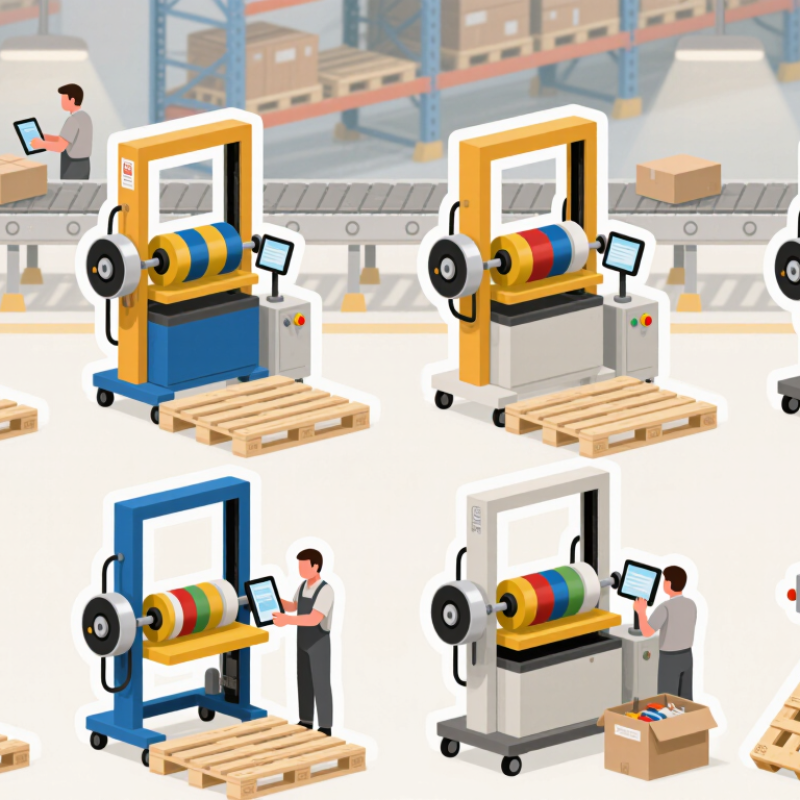
What Is a Pallet Banding Machine and How Does It Work?
A pallet banding machine secures cartons, sacks, or rigid containers with plastic straps. The load enters a guided frame, usually by conveyor or forklift. A strap then travels around the pallet, feeds through a channel, and returns to the sealing head. The machine tensions the strap, heat-seals or welds it, and cuts the excess. That cycle may take only a few seconds.
Small details matter. Excessive tension can crush cartons, while weak tension allows shifting during transport. Edge protectors help distribute pressure around sharp corners. Photoelectric sensors check load position, but dusty warehouses can still cause mistakes. Operators should test strap width, surface friction, pallet height, and load stability before choosing settings. It is not fully automatic in practice.
UNCTAD’s Review of Maritime Transport reports that more than 80% of global merchandise trade by volume moves by sea. Long journeys make stable pallet loads essential. The Freedonia Group’s World Pallets study also identifies automation and higher unit-load throughput as important market drivers. These trends explain growing interest in vertical and horizontal banding systems.
A practical machine should offer adjustable tension, reliable sealing, safe access, and simple maintenance. Buyers should also verify compatibility with polypropylene or polyester strap. A faster cycle is not always better. If the strap damages products, the machine is poorly matched, even when its output looks impressive.
Key Types of Pallet Banding Machines for Different Loads
Pallet banding machines vary because loads fail in different ways. Semi-automatic turntable machines suit low-volume warehouses and mixed pallet sizes. Operators position the pallet, tension the strap, and seal it. They cost less, but results depend heavily on operator consistency. That weakness is easy to underestimate.
Automatic inline banding machines fit distribution centers processing stable pallet patterns. They can apply two or more bands without stopping the conveyor. The International Federation of Robotics reported 541,302 industrial robots installed worldwide in 2023, a 10% annual increase. This reflects stronger automation demand, but a banding machine still needs correct pallet detection and maintenance planning. Automation alone cannot repair poor load design.
Vertical banding machines secure cartons from top to bottom, making them useful for stacked boxes, paper products, and lightweight loads. Horizontal machines wrap around the pallet sides and suit irregular or unstable loads.
For fragile products, adjustable tension and heat-seal control matter more than maximum speed. Heavy construction materials may require high-tension steel or composite strapping, while export cartons often need plastic strap compatibility.
ISO 1161 container-corner dimensions can also affect pallet clearance during handling. In practical trials, I would test the weakest pallet, not the ideal one. That choice may reveal disappointing results, but it is more reliable. PMMI industry research continues to identify labor availability and automation as major packaging concerns. A machine that saves labor but damages corners is not an efficient purchase.
Seven Best Pallet Banding Machines for Global Buyers
Seven Best Pallet Banding Machines for Global Buyers should be judged by load shape, labor cost, and service access.
The seven practical choices are automatic inline banders, rotary-table banders, horizontal banders, semi-automatic units, mobile battery banders, corner-board banding systems, and combined PP/PET strap machines. Automatic inline models suit high-volume warehouses. Rotary systems handle consistent pallets quickly. Horizontal banders work well with unstable or oversized loads. Semi-automatic machines reduce investment for smaller exporters. Mobile units help facilities with scattered packing areas.
Industry data supports careful automation planning. The International Federation of Robotics reported 541,302 industrial robots installed worldwide in 2023. That figure reflects rising automation demand, but pallet handling still needs human judgment.
PMMI’s packaging machinery research also highlights labor availability, changeover time, and equipment integration as major buying concerns. Smithers forecasts the global packaging market will approach 1.2 trillion dollars by 2028.
More shipments mean more pressure on secure, repeatable pallet preparation. Yet catalog speed can mislead. A machine running 30 cycles per minute may slow sharply with uneven loads.
Tips: Test three real pallet types before purchasing. Measure strap tension, cycle time, noise, and access for maintenance. Ask for spare-parts delivery times in your region. A cheaper machine can become expensive when one sensor stops production. Also check voltage, safety guarding, language support, and operator training. These details are easy to overlook. They should not be.
How to Compare Performance, Materials, and Operating Costs
7 Best Pallet Banding Machines for Global Buyers?
How to Compare Performance, Materials, and Operating Costs
Choosing a pallet banding machine requires more than comparing cycle speed. Check tension consistency, sealing strength, band width, and adjustment range. A machine producing 25 pallets per hour may still cost more if operators frequently correct loose bands. PMMI’s Packaging Machinery Economic Outlook identifies labor availability and automation as major investment drivers. This supports machines with automatic feeding, tension control, and simple diagnostics. However, published speed figures often assume ideal pallet sizes. Real warehouses are less predictable.
Material selection changes both performance and environmental exposure. Polypropylene banding suits lighter loads and generally costs less. Polyester offers higher retained tension for dense or uneven pallets. Steel remains useful for extreme loads, but it increases handling weight and corrosion concerns. The OECD Global Plastics Outlook reported 353 million tonnes of plastic waste in 2019, with only 9% recycled. Buyers should therefore compare recycled-content options, recovery routes, and band consumption per pallet. “Cheaper” is not always cheaper.
Tips: Test three typical pallets, not one perfect pallet. Record bands used, failed seals, energy consumption, and operator minutes. Ask suppliers for data under your actual load conditions. Include spare parts, training, compressed-air demand, and planned maintenance in the total-cost model. A faster machine can disappoint if its seal heater needs frequent replacement. I would also question impressive payback claims; local labor rates and export packaging rules can change the result quickly.
Global Buying Checklist: Safety, Standards, Service, and Shipping
7 Best Pallet Banding Machines for Global Buyers?
For global buyers, the best pallet banding machine is not always the fastest model. Manual, battery-powered, pneumatic, semi-automatic, automatic, horizontal, and combined systems suit different workloads. Check daily pallet volume, band width, tension range, and available power before comparing prices. A machine running beside a cold loading dock may need stronger protection than one used indoors. Small details matter.
Safety should be checked through guards, emergency stops, stable frames, and controlled tension. Ask for test records and clear operating instructions. Confirm whether the machine supports the destination’s voltage, plug type, and frequency. Relevant standards may include ISO 12100, IEC 60204-1, and applicable regional conformity requirements. Do not rely on a certificate image alone. Request the declaration, test scope, and serial-number traceability. Requirements can differ between countries.
Service often decides whether a machine remains useful after installation. Require spare-part lists, response times, remote training, and local technician options. Shipping plans should specify crate dimensions, moisture protection, loading methods, insurance, and customs documents. A cheap unit can become expensive after a damaged control panel or missing component. I would request a video of the packed machine and a pre-shipment inspection. Still, even careful checks can miss problems. That is why a small trial order may be wiser than a large commitment.
Global Pallet Banding Machine Buying Checklist
This planning benchmark gives the greatest emphasis to operator safety, international compliance, after-sales service, and shipping readiness. Buyers should verify each requirement against the destination country's regulations, facility conditions, pallet dimensions, strap material, and expected production volume.
Related Posts
-
How to Choose the Best Pallet Banding Machine for Your Needs?
-
What Is an Automatic Strapping Machine and How Does It Work?
-
7 Best Automatic Strapping Machines for Global Buyers
-
7 Best Pallet Strapping Machines for Global Buyers?
-
Essential Tips for Choosing the Best Automatic Banding Machine for Your Business
-
Why Choose a Plastic Wrapping Machine for Your Packaging Needs?