




China Top Automatic Bagging Machine Manufacturers?
China has become a major production base for packaging equipment, including the automatic bagging machine. Its manufacturers serve food, agriculture, chemicals, pet food, and construction materials. Yet “top” should not mean the largest factory alone. It should mean verified performance, stable engineering, and dependable after-sales support.
PMMI’s 2024 State of the Industry report identifies labor shortages, automation demand, and production flexibility as continuing packaging priorities. These pressures are visible on a factory floor: fewer operators, faster filling cycles, cleaner sealing, and reduced product spillage. MarketsandMarkets also projects continued growth in the global packaging machinery sector, driven by automation and packaged-food consumption. The exact figures differ between reports. That difference matters.
Jorge Izquierdo, Vice President of Market Development at PMMI, has stated, “Automation is a key driver of productivity, flexibility, and sustainability.” His observation explains why buyers increasingly examine complete systems, not only machine prices. A reliable automatic bagging machine should offer consistent weighing, accurate bag opening, secure sealing, and simple maintenance access. It should also communicate clearly with conveyors, checkweighers, and palletizing equipment.
This guide examines leading Chinese manufacturers through practical criteria. These include factory experience, customization capability, certifications, installation support, spare-parts availability, and documented customer results. Product videos can look impressive. They are not enough. Buyers should request test samples, cycle-time evidence, warranty terms, and references from similar applications. No ranking is flawless, especially when supplier data changes quickly. Still, careful comparison can reveal which companies deliver repeatable performance rather than attractive promises.
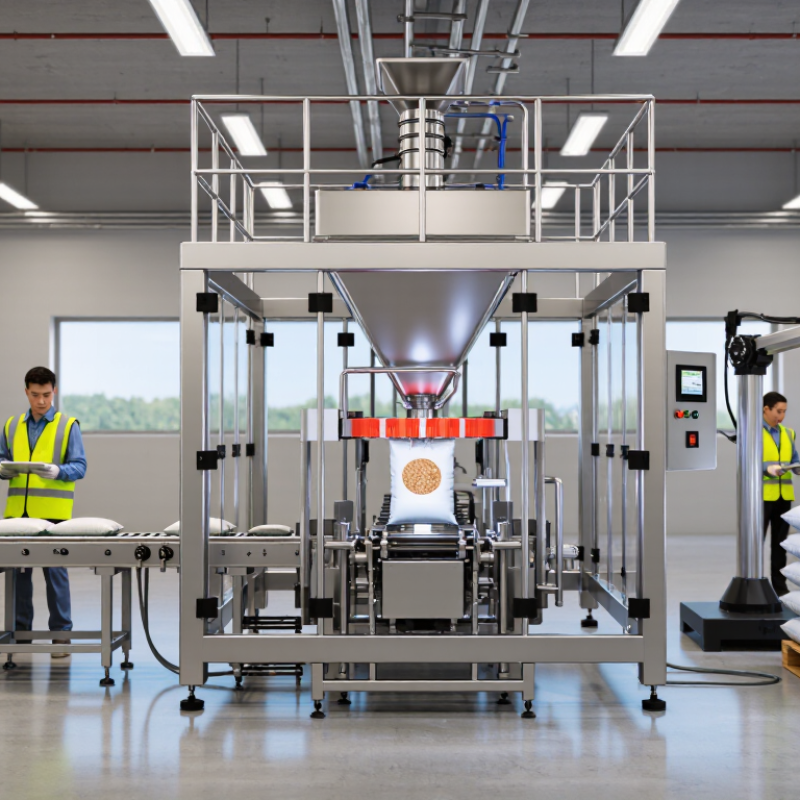
What Is an Automatic Bagging Machine?
An automatic bagging machine is equipment that fills and closes bags with limited manual handling. It usually combines bag feeding, product dosing, filling, sealing, and discharge in one controlled process. Depending on the design, it can handle powders, granules, pellets, or other dry materials. Common systems use sensors, conveyors, weighing units, and programmable controls to maintain steady production.
The process begins when empty bags enter the machine. A gripper opens each bag and positions it beneath the filling station. The dosing unit measures the material by weight or volume. After filling, the machine may heat-seal, stitch, clamp, or fold the bag mouth. Accurate alignment matters. A small positioning error can cause weak seals or product loss.
In practical production, automatic bagging is not completely maintenance-free. Dust may affect sensors, while humidity can change material flow. Uneven bags can also slow the line. Operators should check fill accuracy, sealing temperature, air pressure, and emergency stops during each shift. These checks support safer and more reliable operation. The correct machine depends on bag size, product behavior, output targets, and available factory space. A machine that performs well with granules may struggle with fine powder. This is often overlooked. Before selecting equipment from a manufacturer, buyers should request material trials, maintenance details, spare-part information, and documented performance data. Proper testing is more trustworthy than impressive specifications.
China Top Automatic Bagging Machine Manufacturers? - What Is an Automatic Bagging Machine?
An automatic bagging machine is an industrial system that automatically forms or opens bags, fills them with a measured product, closes the bags, and transfers the finished packages. The following table summarizes common machine configurations and practical selection data without listing company or brand information.
| Machine Configuration | Typical Product | Compatible Bag Format | Typical Filling Range | Typical Output | Common Filling Method |
|---|---|---|---|---|---|
| Open-Mouth Bagging Machine | Grains, seeds, feed, powders, and granules | Pre-made open-mouth paper, woven polypropylene, or polyethylene bags | 5–50 kg per bag | Approximately 8–25 bags per minute | Net weighing or gross weighing |
| Valve Bag Filling Machine | Cement, minerals, flour, chemicals, and fine powders | Pre-made valve bags | 10–50 kg per bag | Approximately 5–30 bags per minute | Air, impeller, screw, or auger filling |
| Form-Fill-Seal Bagging Machine | Rice, sugar, snacks, pellets, powders, and small granules | Roll film converted into pillow, gusseted, or block-bottom bags | 100 g–25 kg per bag | Approximately 20–80 bags per minute | Multi-head weigher, linear weigher, auger, or volumetric cup |
| Premade Pouch Packing Machine | Granules, powders, liquids, sauces, and mixed products | Stand-up, flat, zipper, or spouted premade pouches | 10 g–5 kg per pouch | Approximately 15–60 pouches per minute | Weighing, auger dosing, piston dosing, or liquid pumping |
| Bulk Bag Filling System | Powders, minerals, chemicals, agricultural products, and pellets | Flexible intermediate bulk containers, commonly called FIBCs or bulk bags | 250–2,000 kg per bag | Approximately 4–15 bags per hour | Gross weighing with gravity, vibration, or screw feeding |
Key Technical Selection Criteria
| Selection Dimension | Typical Technical Data | Why It Matters |
|---|---|---|
| Weighing Accuracy | Often within approximately ±0.1% to ±0.5%, depending on the product, target weight, and legal metrology requirements | Controls product giveaway, package consistency, and compliance with declared net quantity |
| Compressed Air Requirement | Commonly about 0.6–0.8 MPa supplied pressure; consumption varies by configuration | Adequate, clean, and dry air is needed for pneumatic cylinders, clamps, valves, and actuators |
| Electrical Supply | Common industrial supplies include 220 V or 380 V AC, 50 Hz; the required phase and voltage must be confirmed before purchase | Ensures compatibility with the installation site and prevents commissioning delays |
| Product Characteristics | Particle size, bulk density, moisture, flowability, dust level, and temperature | Determines whether the system should use gravity, vibration, auger, impeller, belt, or liquid dosing |
| Bag Material | Paper, woven polypropylene, polyethylene, laminated film, or multilayer flexible packaging | Affects bag opening, sealing temperature, dust control, strength, and package appearance |
| Control System | PLC control, touchscreen interface, recipe storage, alarm monitoring, and sensor-based interlocks | Improves repeatability, operator control, troubleshooting, and production data management |
| Downstream Integration | Conveyors, checkweighers, metal detectors, seal inspection, palletizers, and stretch wrappers | Allows the bagging machine to operate as part of a complete automated packaging line |
Note: Performance values are typical industry ranges for comparison purposes. Actual capacity, accuracy, dimensions, power consumption, and air usage depend on the product, bag specification, machine configuration, and operating conditions.
Related Posts
-
Why Choose a Bagging Machine for Global Sourcing?
-
Top 10 Automatic Shrink Wrap Machines for Global Buyers
-
How to Choose an Automatic Shrink Wrap Machine in 2026?
-
How to Choose a Packaging Machine in 2026?
-
Top China Automatic Strapping Machine for Global Buyers?
-
How to Choose the Best Shrink Wrap Machine for Your Business?