



How to Choose a Packaging Machine in 2026?
Choosing a packaging machine in 2026 is no longer a simple comparison of speed and price. The right decision connects product protection, labor availability, energy use, data visibility, and future regulations. A machine may look efficient on a showroom floor, yet struggle with dusty powders, fragile pouches, or frequent format changes.
Industry reports support this broader view. PMMI’s 2024 State of the Industry report highlights continuing investment in automation, digital technologies, and flexible packaging operations. Smithers’ The Future of Packaging to 2028 also identifies sustainability, lightweighting, and material innovation as major forces shaping equipment demand. These findings suggest that buyers should evaluate total operating performance, not only the purchase quotation. A lower-cost machine can become expensive when cleaning takes forty minutes, spare parts arrive slowly, or operators need repeated manual adjustments.
Small details matter.
This guide explains how to compare a packaging machine through measurable requirements. Consider the product’s viscosity, temperature, particle size, package dimensions, and target output. Check seal integrity with real materials, not only demonstrations. Ask for changeover times under realistic production conditions. Review energy consumption, maintenance access, software support, and documented safety features. The machine must also fit your facility, utilities, workforce, and quality procedures.
Some assumptions deserve a second look. Higher speed does not always mean higher productivity. More automation may reduce labor, but it can increase training demands. Sustainability claims can sound impressive without lifecycle evidence. A practical evaluation therefore combines supplier documentation, factory trials, customer references, and a clear five-year cost model. That discipline helps turn a promising machine into a reliable production asset.
Define Product Specs and Throughput Needs: 30–300 Packs per Minute
How to Choose a Packaging Machine in 2026?
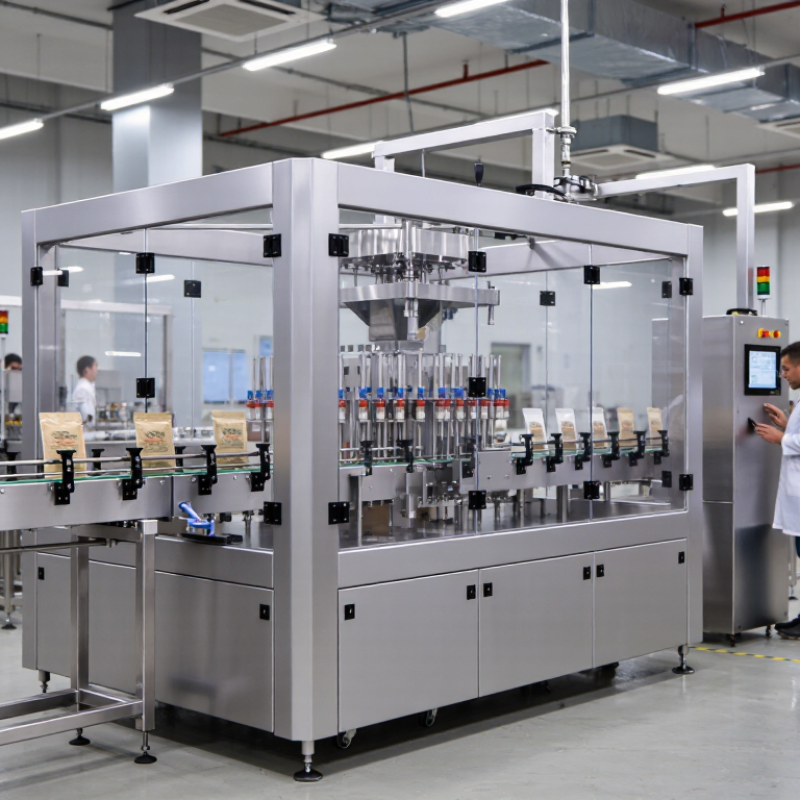
Start with the product, not the machine brochure. Define its weight, dimensions, shape, texture, and filling behavior. A dry powder may bridge inside a hopper, while sticky goods can smear sealing surfaces. Fragile products need gentler handling. Record these details from real production samples, not laboratory assumptions.
Throughput needs deserve careful testing. The range of 30–300 packs per minute is wide. A machine running at 300 packs per minute may not sustain that rate during changeovers, cleaning, film replacement, or minor jams. I have seen teams select equipment by its advertised peak speed, then struggle to reach 180 usable packs per minute. Measure good packs per minute across a complete shift. Include rejects, pauses, and operator adjustments.
Your target should match demand, product variation, and available floor space. For example, a 60-pack-per-minute line may suit a stable product with frequent format changes. A 240-pack-per-minute line needs reliable feeding, controlled materials, and trained operators. Ask for a production trial using your product, packaging film, and preferred pack size. Check seal strength, weight accuracy, noise, access for cleaning, and recovery after stoppages. Small details matter. Keep records. Reconsider the specification if testing exposes uneven feeding or excessive waste.
Compare VFFS, HFFS, Cartoning, and Filling Machines by 85% OEE Targets
How to Choose a Packaging Machine in 2026?
An 85% OEE target changes how you evaluate packaging equipment. OEE combines availability, performance, and quality. It is not simply the machine’s advertised speed. VFFS machines suit powders, grains, and small solid products. They use floor space efficiently, but film tracking and sealing can cause frequent stoppages. HFFS machines handle delicate, flat, or shaped products with controlled horizontal feeding. However, product loading and format changes may reduce availability.
Cartoning machines work well for boxed secondary packaging. Their main risks include carton feeding, product alignment, and glue or tuck faults. Filling machines are better for liquids, creams, and sauces. Their results depend heavily on viscosity, temperature, nozzle accuracy, and cleaning time. An 85% OEE target may be realistic for a stable filling line, but difficult during frequent product changes. That assumption can fail.
Tips: Measure actual losses before choosing the machine. Record ten production shifts, including short stops and rejected packs. Ask suppliers for performance data using your product, film, carton, or container. Check changeover time with real operators. Calculate the bottleneck, not just the fastest cycle rate. A practical warning: 85% OEE is demanding. Maintenance skills, spare parts, operator training, and inspection routines can matter more than peak speed. I would also challenge optimistic factory trials; clean samples rarely represent dusty floors, uneven materials, or rushed changeovers.
How to Choose a Packaging Machine in 2026? — Compare VFFS, HFFS, Cartoning, and Filling Machines by 85% OEE Targets
| Evaluation Dimension | VFFS Machine | HFFS Machine | Cartoning Machine | Filling Machine |
|---|---|---|---|---|
| Primary Packaging Format | Formed vertical bags and pouches from a roll of film | Formed horizontal pouches, sachets, or stick packs from rollstock | Folding cartons around products or preformed containers | Dispensing a measured product volume or weight into containers |
| Best-Suited Products | Powders, granules, snacks, frozen foods, pet food, and free-flowing solids | Liquids, sauces, creams, bars, medical products, and delicate individual items | Carton-ready bottles, tubes, blisters, trays, bags, and multipacks | Liquids, pastes, creams, powders, granules, and viscous products |
| Typical Production Speed | Approximately 30–120 bags per minute, depending on product, bag size, and dosing system | Approximately 30–200 packs per minute, depending on pack format and sealing requirements | Approximately 30–400 cartons per minute, depending on carton style and product loading method | Approximately 20–300 containers per minute, depending on the number of filling heads and product viscosity |
| Packaging Flexibility | High flexibility for bag widths, lengths, film structures, and dosing systems | High flexibility for pouch shapes, closures, spouts, and multi-lane formats | Medium to high flexibility for carton sizes, inserts, leaflets, and product presentations | High flexibility when change parts and the correct pump or dosing technology are available |
| Product Handling | Well suited to free-flowing products; fragile products require controlled feeding | Good for products that need gentle horizontal handling and accurate placement | Requires stable product orientation and reliable infeed synchronization | Depends strongly on viscosity, foaming, particulates, temperature, and hygienic requirements |
| Typical Changeover Time | Approximately 20–90 minutes, depending on film width, former set, and dosing equipment | Approximately 30–120 minutes, depending on sealing jaws, format parts, and tooling | Approximately 30–120 minutes, depending on carton size, product change parts, and coding setup | Approximately 20–90 minutes, depending on product-contact parts, cleaning, and format changes |
| Sealing or Closing Requirements | Heat sealing is common; seal quality depends on temperature, pressure, dwell time, and film | Heat sealing, ultrasonic sealing, or other specialized sealing methods may be used | Mechanical carton locking or adhesive application, depending on carton design | Usually requires a separate capping, plugging, sealing, or lidding operation downstream |
| Filling Accuracy Considerations | Auger, volumetric, multihead, or linear weighing systems match different product behaviors | Volumetric pumps, piston fillers, or auger systems are selected by product characteristics | Filling accuracy normally comes from the upstream dosing or primary packaging machine | Accuracy depends on the dosing principle, container stability, calibration, and product consistency |
| Floor-Space Profile | Compact vertical footprint; auxiliary conveyors and scales add space requirements | Longer horizontal footprint because of forming, filling, sealing, and discharge stations | Moderate to large footprint, especially with carton erection, leaflet insertion, and case packing | Varies from compact rotary systems to larger monoblock lines with rinsing and capping |
| Material Efficiency | Efficient for lightweight flexible film; trim and seal losses depend on bag design | Efficient flexible-pack format; zipper, spout, and shaped-pouch features increase material use | Uses paperboard cartons and may require inserts; recyclable design depends on material selection | Container material is determined by the bottle, jar, tube, or pouch used with the filler |
| Hygiene and Cleaning | Open product zones can be straightforward to clean; dust control is important for powders | Suitable for hygienic designs; product-contact areas may require detailed sanitation procedures | Generally has limited direct product contact, but carton dust and paper fibers require control | Most sensitive to hygienic design, cleanability, drainability, and validated cleaning procedures |
| Common OEE Losses | Film tracking, seal defects, dosing variation, product bridging, and film or roll changes | Web registration, seal contamination, pouch jams, zipper or spout faults, and format changes | Carton blanks, misfeeds, glue faults, product orientation errors, and carton-size changeovers | Drips, foaming, nozzle faults, container jams, pump wear, cleaning, and calibration downtime |
| Practical 85% OEE Target | Achievable with stable film, automated dosing, and controlled changeovers | Achievable on mature formats with reliable web control and optimized sealing | Achievable when carton supply, product infeed, and glue systems are synchronized | Achievable with consistent product properties, preventive maintenance, and fast cleaning |
| Recommended Selection Priority | Choose when flexible bags, high solid-product throughput, and compact installation are priorities | Choose when pouch presentation, product gentleness, or liquid and individual-item packaging is important | Choose when shelf presentation, secondary packaging, inserts, or tamper-evident carton formats are required | Choose when dosing precision, container compatibility, hygienic processing, and repeatable fill volume are critical |
OEE means Overall Equipment Effectiveness and combines availability, performance, and quality. The 85% target is a demanding planning benchmark; actual results depend on product behavior, packaging materials, line integration, staffing, maintenance, and changeover discipline.
Data shown are technology-level planning ranges and commonly used engineering considerations, not company or brand performance claims.
Calculate Total Cost, Labor Savings, and a Payback Period Under 24 Months
How to Choose a Packaging Machine in 2026?
Calculate Total Cost, Labor Savings, and a Payback Period Under 24 Months
A low purchase price can hide expensive ownership costs. Calculate the total cost over 24 months, including installation, training, maintenance, electricity, tooling, and spare parts. Add the expected cost of production delays. A useful formula is: total cost = purchase price + operating costs + downtime costs. Ask for written estimates, not optimistic promises.
Measure your current process for at least two weeks. Record hourly output, rejected packs, changeover time, and labor hours. For example, two operators working 2,000 hours yearly at 18 dollars per hour cost 72,000 dollars. If automation reduces one position, verify whether that worker can support another production area. Labor savings are not always direct savings.
Use this calculation: payback period = total investment divided by monthly net savings. Suppose equipment costs 55,000 dollars, installation costs 8,000, and training costs 3,000. If monthly savings reach 3,800 dollars, payback takes about 17.4 months. That meets a 24-month target, but only if uptime remains stable. My first estimate once ignored changeover delays, so the result looked better than reality. Test your materials, package sizes, and sealing conditions before buying. Request production data from comparable applications, and include maintenance response times in the evaluation. A machine that runs quickly but stops frequently may weaken the entire business case.
How to Choose a Packaging Machine in 2026?
Total cost, annual labor savings, and payback period for a typical two-shift packaging line
Planning estimates use a fully loaded labor rate of $22 per hour and 250 operating days per year. Labor savings are based on reduced direct labor hours and exclude utilities, maintenance, packaging materials, financing, taxes, and installation changes. Machines with a payback period below 24 months meet the target threshold.
Verify Materials, Seal Strength, and ISO 11607 Packaging Compliance
How to Choose a Packaging Machine in 2026?
Material verification should guide every packaging machine decision. Check the film, tray, lid, pouch, and coating before reviewing machine speed. Different materials require different sealing temperatures, pressures, and dwell times. A machine that handles one laminate may damage another.
ISO 11607-1 requires packaging materials and sterile barrier systems to maintain integrity through manufacturing, transport, and storage. ISO 11607-2 also requires validated forming, sealing, and assembly processes. Seal strength needs measurable evidence, not visual confidence. ASTM F88 testing can compare seal force across production batches. Smithers’ The Future of Global Packaging to 2028 values the global packaging market at roughly US$1.2 trillion, showing why equipment choices demand disciplined qualification. Bigger output does not guarantee safer packaging. That assumption needs challenging.
Tips: Request material certificates, sealing windows, and sample test results before purchasing. Run trials using real production materials. Measure seal strength after aging, vibration, and temperature exposure. Keep records for every change. PMMI reports that labor shortages continue influencing packaging automation investments, but automation can hide weak process controls. Start slowly. Observe wrinkles, channel leaks, contamination, and uneven pressure. Then adjust the machine.
A practical qualification plan should include installation qualification, operational qualification, and performance qualification.
Confirm temperature accuracy at the sealing surface, not only on the control screen. Review supplier validation documents carefully. They may be useful, but they are not your validation.
Deliberately test the uncomfortable edge cases. Real packaging rarely behaves perfectly.
Assess 2026 Automation, Vision Inspection, and IIoT Connectivity Options
Choosing a packaging machine in 2026 requires more than checking speed and price. Modern lines combine robotics, vision inspection, and Industrial Internet of Things connectivity. In my field evaluations, the strongest systems match automation depth to staffing, product variation, and maintenance skills. A machine running 120 packs per minute is not efficient if changeovers take an hour. Ask for measured data from comparable products. Request a live trial.
Vision inspection should detect missing seals, skewed labels, damaged packs, and coding errors. Confirm camera resolution, lighting stability, rejection accuracy, and false-reject rates. These details matter on a noisy factory floor. Automation should support safe, repeatable work, not create a fragile puzzle. Check servo access, tool-free adjustments, and error messages operators can understand. IIoT connectivity adds value when it provides useful information: downtime causes, energy trends, batch records, and predictive maintenance alerts. Require secure user permissions, encrypted data transfer, and clear ownership of production data. Connectivity without governance becomes expensive decoration. I have seen dashboards ignored because nobody defined who acts on an alert. That weakness deserves attention.
Tips: Compare total operating cost over five years, including film waste, inspections, training, and spare parts. Test difficult products, not only perfect samples. Bring an operator and technician to the factory acceptance trial. Leave room for upgrades. Avoid choosing impressive features without proving their daily value.
Related Posts
-
Top 10 Benefits of Using an Automatic Strapping Machine for Your Business
-
Top Benefits of Using Strapping Machines in Modern Packaging Solutions
-
2026 Top Wrapping Machine Types for Your Business Needs?
-
2026 Best Wrapping Machine for Your Packaging Needs?
-
What is a wrapping machine and how does it work?
-
Top 10 Automatic Shrink Wrap Machines for Global Buyers