How to Choose an Automatic Shrink Wrap Machine in 2026?
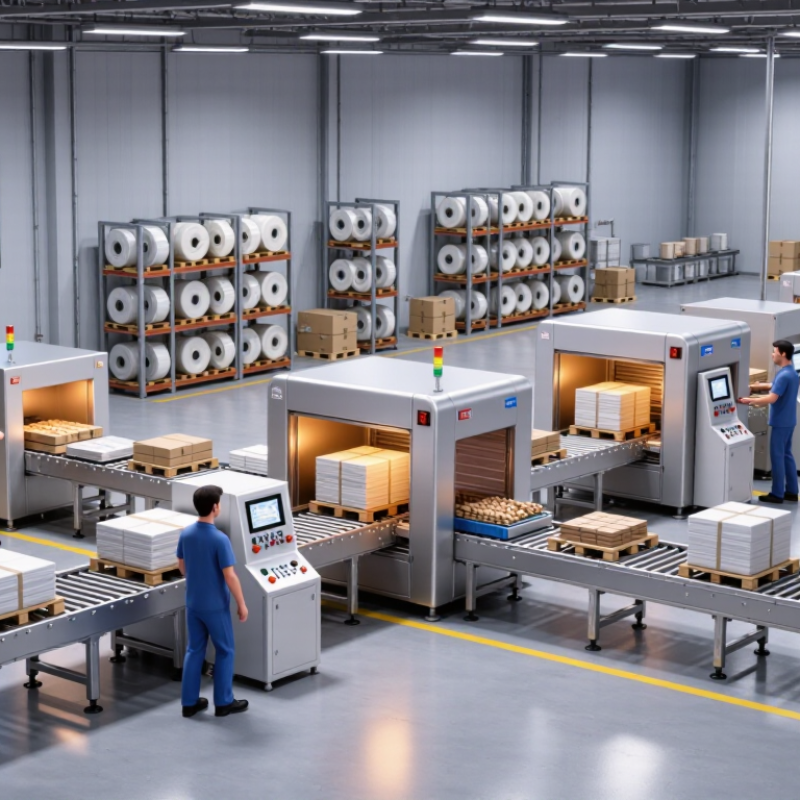
Choosing an automatic shrink wrap machine in 2026 is not simply a search for higher speed. It is a decision about product protection, labor flow, energy use, and future production demands. A machine that looks impressive at a trade show may struggle beside your actual line. Film wrinkles, uneven seals, overheated tunnels, and frequent changeovers reveal the truth quickly.
Packaging machinery expert John R. Henry has stated, “The best packaging machine is one that matches the product, process, and people using it.” That principle remains practical. A bakery may need gentle handling for soft trays, while a hardware manufacturer may prioritize strong seals and continuous operation. Product dimensions matter. Film type matters. So does the operator’s experience at 6 a.m. during a rushed production change.
This guide examines how to choose an automatic shrink wrap machine for real working conditions. It considers sealing width, tunnel temperature control, conveyor design, film compatibility, throughput, maintenance access, and safety features. Energy consumption deserves attention too. A faster tunnel is not always a better tunnel. It may increase operating costs or damage heat-sensitive packaging.
The right choice should begin with measured needs, not attractive specifications. Record your products, pack sizes, hourly output, and changeover frequency. Speak with operators. Watch the machine run similar materials. Small details matter.
No checklist is perfect.
Some assumptions will be wrong. That is normal. A careful buyer tests those assumptions before signing a purchase order, then compares total ownership costs rather than headline price.
Define Your Packaging Needs and Production Requirements
Before choosing an automatic shrink wrap machine, define what you actually package. Record product dimensions, weight, shape, and surface sensitivity. A carton and a bottle may need different film tension and sealing temperatures. Measure the largest and smallest products twice. Small details matter.
Production requirements should be written in numbers, not assumptions. Estimate hourly output, daily operating time, product changeover frequency, and available floor space. Check whether the machine can match your conveyor speed without creating gaps or jams. Film width, film thickness, and roll diameter also affect performance.
During a packaging trial, inspect seal strength, film clarity, wrinkles, and shrink quality after cooling.
Leave room for real workplace conditions. Dust, uneven product spacing, and operator mistakes can reduce the advertised speed. A machine that runs well in a demonstration may perform differently during a long shift. Ask for sample testing with your own products and film.
Review controls, safety features, cleaning access, and routine maintenance requirements. Energy use matters too, especially when the machine operates continuously.
I have seen planning focus heavily on speed while ignoring changeover time. That can make a fast machine inefficient in daily production. Choose specifications that fit your current workflow, while allowing modest future growth.
Compare Shrink Wrap Machine Types and Operating Methods
How to Choose an Automatic Shrink Wrap Machine in 2026?
Compare Shrink Wrap Machine Types and Operating Methods
The right machine depends on product size, film type, speed, and sealing accuracy. Grand View Research valued the global shrink film market at about USD 10.45 billion in 2023. It also forecasts roughly 6.5% annual growth through 2030. That growth increases pressure on packaging lines to reduce film waste and downtime.
L-bar sealers suit uniform products and bundled cartons. They cut and seal film in one motion, then send packs through a heated tunnel. Side-seal machines handle long products more smoothly. Their continuous sealing method supports higher output and fewer product-length changes. Sleeve wrappers use a different method. They wrap film around grouped items and often need less sealing precision.
Operating method matters more than the machine’s advertised speed. Intermittent systems stop during sealing, making them easier to control. Continuous systems keep products moving and suit stable, high-volume lines. Polyolefin film usually gives clear presentation and reliable shrink results. Polyethylene film offers stronger protection for heavier packs. Film thickness, tunnel temperature, and conveyor speed must be tested together. Small changes can create wrinkles, weak seals, or overheated corners.
Do not trust speed alone.
A practical trial should measure finished packs per minute, film consumption, seal strength, and changeover time. PMMI industry reports consistently identify labor efficiency and automation as major packaging investment drivers. Still, one selection mistake is common: choosing maximum capacity instead of actual demand. A slower machine may perform better when product sizes change often. I would also question impressive energy claims unless they include tunnel warm-up, idle time, and rejected packs.
How to Choose an Automatic Shrink Wrap Machine in 2026?
Compare shrink wrap machine types and operating methods by typical production speed.
The ranges show typical production rates in packs per minute for common machine configurations. Chamber machines are suitable for low-volume, flexible operations; L-bar sealers support semi-automatic batch production; side-seal machines provide continuous high-speed wrapping; and sleeve sealers are commonly used for bundled products and multipacks. Actual output depends on product dimensions, film type, sealing time, loading method, and operator workflow.
Evaluate Film Compatibility, Sealing Quality, and Package Size
How to Choose an Automatic Shrink Wrap Machine in 2026?
Film compatibility should guide your first machine comparison. Common films include polyolefin, polyethylene, and PVC. Each requires different sealing temperatures, dwell times, and tunnel settings. Ask for a sample trial using your actual film roll. I have seen a clean seal fail after humidity changed. Film width, thickness, and folding style also affect feeding accuracy. A machine that accepts several film types offers flexibility, but broader compatibility may reduce sealing speed. That trade-off deserves attention.
Sealing quality is more than a neat appearance. Inspect the seal for wrinkles, pinholes, weak corners, and burnt edges. Use repeated tests, not one attractive sample. A good trial should include dusty cartons, uneven products, and continuous operation. Check whether the sealing blade stays stable after hundreds of cycles. A temperature display helps, but an independent measurement is more reliable. Small gaps can expose products during storage or transport. Operators should also adjust pressure without complicated tools.
Measure every package carefully. Record length, width, height, weight, and the smallest production size. Leave enough tunnel space for air circulation, but avoid buying excessive capacity. Oversized equipment can waste energy and floor space. Confirm the maximum film width and sealing bar dimensions. Product changes may be frequent in 2026. Automatic sensors can reduce manual errors, although they still need regular cleaning and calibration. I once underestimated package height by a few millimeters. That mistake caused avoidable retesting.
Check Machine Speed, Automation Features, and Safety Standards
How to Choose an Automatic Shrink Wrap Machine in 2026?
Machine speed should match your real production flow, not an impressive brochure number. Check finished packs per minute, film width, product size, and changeover time. During a factory test, run your actual products for at least thirty minutes. Watch for loose film, weak seals, or frequent stops. A fast machine can still reduce output when operators constantly correct errors. I have seen this happen.
Automation features should remove repetitive work without making the system difficult to control. Useful functions include automatic film feeding, product detection, recipe storage, jam alerts, and adjustable sealing temperature. A clear touchscreen helps operators respond quickly. Remote diagnostics may reduce downtime, but they should not replace local training or maintenance records. Keep controls simple.
Safety deserves equal attention. Inspect fixed guards, door interlocks, emergency stops, heat protection, and safe access around moving belts. Ask for a documented risk assessment, with machinery design considered against standards such as ISO 12100. Electrical systems may also require alignment with IEC 60204-1 and applicable local requirements. Do not accept vague assurances. Request test records and observe an emergency-stop test. One weakness remains easy to miss: cleaning access. If operators must reach awkward hot areas, safe procedures may fail in daily use. That detail deserves another review.
How to Choose an Automatic Shrink Wrap Machine in 2026?
Check Machine Speed, Automation Features, and Safety Standards
| Evaluation Dimension | What to Check | Typical Planning Data | Recommended Selection Benchmark | Why It Matters | Verification Method |
|---|---|---|---|---|---|
| Machine Configuration | Choose between automatic L-sealing, side-sealing, or sleeve-wrapping equipment with a shrink tunnel. | Automatic L-sealers are commonly used for lower to medium throughput. Side-sealers and sleeve wrappers are generally better suited to continuous, higher-volume production. | Match the machine type to product shape, film format, required output, and available floor space. | The sealing method affects throughput, seal quality, film consumption, changeover time, and product flexibility. | Run representative products using the intended film and packaging dimensions. |
| Machine Speed | Confirm rated speed, sustainable operating speed, and the effect of product dimensions on output. | Typical planning ranges: approximately 15–40 packs/min for automatic L-sealing systems, 30–80 packs/min for side-sealing systems, and 20–60 packs/min for sleeve-wrapping systems. | Choose a rated capacity at least 15–25% above the required continuous production rate. | Rated maximum speed is usually higher than practical speed after film changes, product variation, rejects, and operator adjustments. | Calculate good packs per minute during a continuous test of at least 30–60 minutes. |
| Product Size Range | Check minimum and maximum product length, width, height, weight, and shape. | Permitted dimensions vary significantly by sealing jaw, conveyor width, film width, and tunnel opening. | Allow approximately 10–15% dimensional clearance beyond the largest regular product where practical. | A machine that operates near its mechanical limit may have unstable seals, film wrinkles, or frequent stoppages. | Test the smallest, largest, lightest, heaviest, and most irregular products in the product range. |
| Film Compatibility | Check compatibility with polyolefin, polyethylene, PVC, or other approved shrink films, including film thickness and roll dimensions. | Film selection depends on product protection, required appearance, sealing temperature, shrink temperature, and distribution conditions. | Use a machine with adjustable sealing and tunnel temperature controls suitable for the selected film. | Incorrect film or temperature settings can cause weak seals, burn-through, excessive shrinkage, or poor presentation. | Confirm the film supplier’s recommended temperature range and perform seal-strength and appearance checks. |
| Automation Level | Evaluate automatic product feeding, film feeding, sealing, film waste removal, shrink tunneling, and discharge. | For continuous production, look for automatic film tracking, automatic temperature control, photoelectric product detection, and synchronized conveyor control. | Select automatic infeed and discharge when labor reduction and consistent cycle time are priorities. | Higher automation can reduce manual handling and variation but may increase purchase price and maintenance complexity. | Measure operator touches per pack, changeover time, and the number of manual interventions per shift. |
| Control System | Check the controller, touchscreen interface, recipe storage, alarm history, and access controls. | Useful functions include stored product recipes, password-protected settings, fault messages, temperature monitoring, and production counters. | Prefer a control system that records key parameters and allows repeatable recipe recall. | Recipe management reduces setup errors and improves repeatability between operators and production runs. | Test recipe creation, password levels, alarm messages, data retention after power loss, and restart behavior. |
| Changeover Performance | Review tool-free adjustments, adjustable guides, film-roll replacement, conveyor height, and sealing-jaw setup. | A well-designed machine should provide clearly marked adjustment scales and quick access to routine setup points. | Set a measurable changeover target based on the number of products and film sizes used each day. | Shorter changeovers increase available production time and reduce material waste. | Time a complete changeover from the last good pack of one product to the first good pack of the next. |
| Sealing Quality | Check seal temperature stability, sealing pressure, seal width, seal-bar condition, and seal consistency. | Seal settings must be matched to film type, thickness, machine speed, and product geometry. | Require consistent, closed seals without burn marks, pinholes, excessive film tails, or product contact. | Reliable seals reduce damaged packages, rework, film waste, and customer complaints. | Inspect samples at startup and during production; use seal-strength testing when required by the application. |
| Shrink Tunnel Performance | Evaluate tunnel length, opening size, conveyor type, airflow, temperature control, and cooling or discharge conditions. | Longer dwell time and controlled airflow may be required for larger products or thicker films. | Choose a tunnel that provides adequate dwell time at the planned line speed without overheating the product. | Insufficient heat or airflow can cause loose film; excessive heat can damage products or distort packaging. | Test packaging at the minimum and maximum planned speeds and record product and film temperatures where appropriate. |
| Safety Risk Assessment | Review guarding, access doors, hot surfaces, moving parts, electrical hazards, emergency stops, and residual risks. | ISO 12100 provides principles for machinery risk assessment and risk reduction. | Request documented risk assessment and evidence that identified hazards have been reduced through design, guarding, and protective measures. | Risk assessment is the foundation for selecting suitable protective devices and safe operating procedures. | Review the risk assessment, safety circuit design, operating instructions, and commissioning records. |
| Electrical Safety | Check wiring, protective bonding, control panels, isolation, overcurrent protection, and electrical documentation. | IEC 60204-1 covers electrical equipment of machines, including protective bonding, control circuits, and documentation requirements. | Specify the applicable electrical standard and local requirements before purchase and installation. | Correct electrical design reduces shock, fire, control malfunction, and maintenance risks. | Request electrical schematics, component ratings, inspection results, and conformity documentation. |
| Safety-Related Controls | Check emergency-stop circuits, guard interlocks, safety relays or safety controllers, and reset functions. | ISO 13849-1 addresses the design and integration of safety-related parts of control systems. ISO 14119 addresses interlocking devices associated with guards. | Ensure the required performance level is determined by a documented risk assessment rather than assumed. | Safety controls must bring the machine to a safe state when a guard is opened or an emergency stop is activated. | Perform functional safety tests during acceptance and verify that restart requires deliberate reset action. |
| Machine Guarding | Inspect fixed guards, movable guards, tunnel openings, sealing areas, nip points, and access to hot components. | ISO 14120 provides general requirements for the design and construction of guards. | Guards should prevent access to hazardous areas while allowing routine cleaning, inspection, and maintenance. | Effective guarding protects operators from crushing, cutting, entanglement, and thermal hazards. | Check guard strength, fasteners, interlocks, visibility, and access time during normal operation and maintenance. |
| Emergency Stop System | Check the location, visibility, accessibility, reset procedure, and stopping behavior of emergency-stop devices. | Emergency stops should be positioned where operators can reach them quickly from relevant work areas. | Provide emergency-stop devices at the operator station and other locations identified by the risk assessment. | Fast access to an emergency stop can limit injury or equipment damage during abnormal events. | Test every emergency-stop device and confirm that restart is prevented until the fault is cleared and reset. |
| Thermal Protection | Check insulation, warning labels, temperature sensors, over-temperature protection, and access to hot sealing and tunnel parts. | Sealing jaws and shrink tunnels operate at elevated temperatures and may remain hot after shutdown. | Use guarded or insulated hot surfaces and provide clear cool-down and maintenance procedures. | Thermal controls reduce burn hazards, film ignition risk, and product damage. | Verify temperature alarms, shutdown functions, surface protection, and warning labels during acceptance testing. |
| Energy and Utilities | Confirm electrical supply, power demand, compressed-air needs, ventilation, and heat rejection. | Common industrial supplies include 220–240 V single-phase or 380–415 V three-phase at 50/60 Hz, but the required supply depends on the machine configuration and location. | Match the machine to the facility’s available voltage, phase, frequency, circuit capacity, and ventilation requirements. | Incorrect utilities can prevent installation, reduce performance, or create electrical and thermal safety risks. | Compare the machine nameplate and installation manual with an electrician’s site survey. |
| Maintenance and Serviceability | Assess access to heaters, sensors, sealing components, belts, bearings, filters, and electrical panels. | Routine maintenance may include cleaning sealing surfaces, checking belts, inspecting sensors, and replacing wear parts. | Prefer accessible components, clear maintenance intervals, diagnostic alarms, and documented spare-part specifications. | Good serviceability reduces downtime and improves long-term operating cost. | Review the preventive-maintenance schedule and perform a supervised access and cleaning trial. |
| Noise and Workplace Conditions | Check noise, heat, fumes, film scraps, operator posture, and access around the line. | Noise and heat levels depend on conveyor drives, fans, heaters, tunnel insulation, and factory ventilation. | Measure workplace conditions during normal production and apply local occupational requirements. | A comfortable work area supports operator safety, productivity, and regulatory compliance. | Measure noise and temperature at operator positions during a representative production cycle. |
| Acceptance Testing | Define performance, safety, product-quality, and documentation requirements before ordering. | Use a factory acceptance test and a site acceptance test with agreed products, film, speed, quality limits, and safety checks. | Approve the machine only after it achieves the agreed good-pack rate and passes required safety tests. | Formal acceptance criteria prevent disagreements and confirm that the equipment meets the intended application. | Record test results for speed, rejects, film waste, changeover, alarms, emergency stops, and guard interlocks. |

Note: Speed, dimensions, energy consumption, and film requirements are typical planning ranges rather than universal specifications. Final values should be confirmed through product trials, the machine manual, applicable local regulations, and a documented risk assessment.
Calculate Total Cost, Maintenance Needs, and Supplier Support
How to Choose an Automatic Shrink Wrap Machine in 2026?
Calculate total cost beyond the purchase price. Include installation, electrical work, film consumption, labor, energy, spare parts, and downtime. A cheaper machine can become expensive after repeated sensor failures.
The arithmetic is less glamorous. The U.S. Bureau of Labor Statistics reported median annual pay above $60,000 for industrial machinery mechanics in May 2023. One avoidable service call can therefore exceed its invoice.
Request verified output data at your film size and product dimensions. Compare sealed packs per minute, rejected packs, warm-up time, and power consumption.
The U.S. Department of Energy estimates compressed-air leaks can waste 20–30% of compressor output. Check whether the machine uses pneumatics, and budget leak inspections.
That number matters. Film waste also deserves a trial-based estimate, not a supplier promise.
Maintenance planning should specify lubrication intervals, heater replacement access, diagnostic alarms, and critical spare-part lead times. Ask for a preventive-maintenance schedule and technician response times in writing.
PMMI’s 2024 U.S. packaging machinery outlook highlights automation and skilled-labor pressure as major investment drivers. Supplier support must address both problems.
Insist on operator training, remote troubleshooting, installation supervision, and local service coverage.
I would also request three months of customer uptime records, although suppliers may resist sharing them. That hesitation deserves attention.
A sensible calculation uses your actual production hours, not an ideal showroom shift.
Related Posts
-
Top 10 Automatic Shrink Wrap Machines for Global Buyers
-
2026 Best Shrink Wrap Machine Reviews and Buying Guide?
-
What is a plastic wrapping machine and how does it work?
-
Top 10 Automatic Stretch Wrap Machines at Canton Fair 2026?
-
Why Choose a Plastic Wrapping Machine for Your Packaging Needs?
-
How to Choose the Right Box Taping Machine for Your Business Needs?