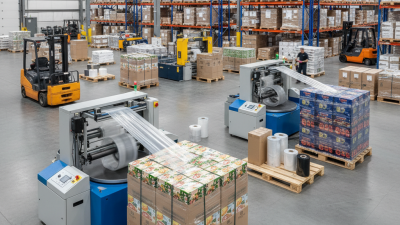



Top Automatic Stretch Wrap Machines for Global Buyers
Shipping teams face a costly choice: secure pallets quickly without using excess film or floor space. An automatic stretch wrap machine can stabilize loads, reduce repetitive handling, and improve wrapping consistency. But results depend on pallet variation, throughput, film selection, and operator training. Small details matter.
Grand View Research valued the global packaging machinery market at USD 45.61 billion in 2023 and projected a 5.7% compound annual growth rate through 2030. This broad market estimate is not specific to stretch wrappers, but it signals continued investment in packaging automation. PMMI’s 2024 State of the Industry report also identifies labor availability and automation as important packaging-sector concerns. These reports offer context, not a promise of savings. No machine is perfect.
For global buyers, selection starts with actual operating conditions: pallet dimensions, daily load counts, line speed, and local service support. A warehouse wrapping mixed cartons may need different controls than a high-volume line handling uniform pallets. Compare turntable, rotary-arm, and ring systems. Check film pre-stretch, safety features, changeover time, and spare-parts access. Ask suppliers to document cycle rates and test the machine with your own loads. A quoted speed can disappoint. This guide compares leading options and their trade-offs, while recognizing that some details require site-specific testing. Even a strong shortlist needs local validation.
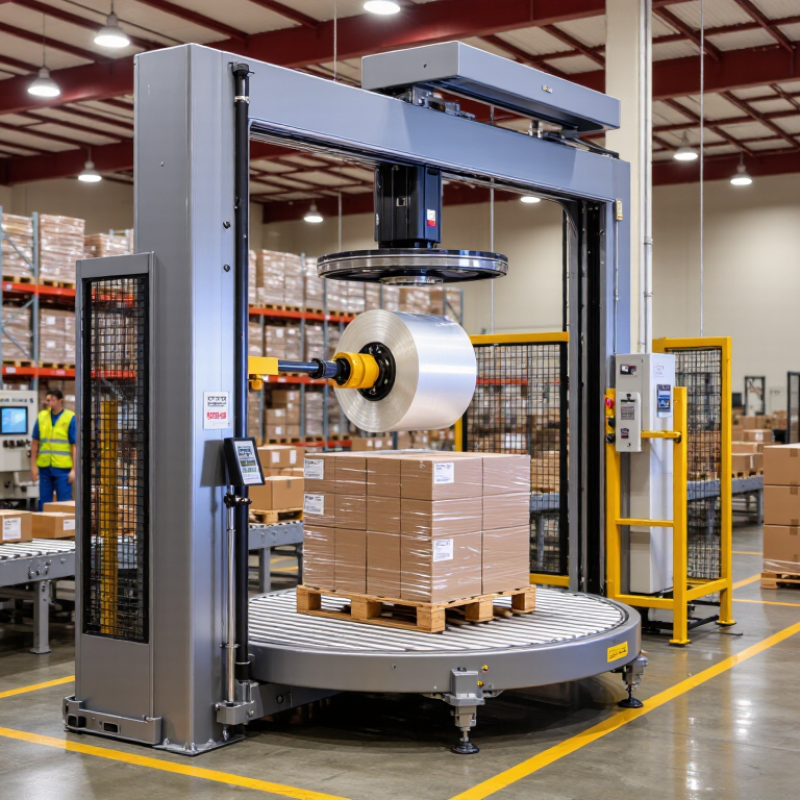
Automatic Stretch Wrappers and ASTM D4649 Film-Selection Principles
Automatic stretch wrappers can apply film consistently, but the machine cannot compensate for a poor film choice. ASTM D4649 provides guidance for selecting and using stretch-wrap films. Treat it as a selection framework, not a universal pass-or-fail specification. Check the applicable edition and compare its guidance with your load, wrapper, and film supplier’s data.
Match film properties to real handling conditions. A tall pallet of boxed goods may need strong load containment, while sharp corners can demand better puncture resistance. Review thickness, tear behavior, cling, and stretch performance together. Then test on the actual wrapper: pre-stretch settings and turntable speed can change how film behaves. Small adjustments matter. We still miss things. Record film use, loose corners, and load movement after transport; those observations can reveal a mismatch that a data sheet will not.
Tips: Wrap representative pallets, including awkward loads. Check corners and top layers after wrapping, then inspect again after a delivery route. Change one setting at a time. Keep notes; memory is unreliable. If the film breaks or the load shifts, reassess both the film and the machine settings before increasing tension.
Turntable, Rotary-Arm, and Ring Wrappers: Match Design to Load
A turntable wrapper rotates the pallet while a film carriage travels vertically beside it. It suits stable, compact loads that can tolerate rotation, such as boxed goods on a well-built pallet. Operators should check load weight, pallet overhang, and whether cartons shift during a slow test cycle. The machine is often straightforward to install. Yet it may struggle with tall, light, or uneven stacks.
Rotary-arm systems keep the load still as an arm carries film around it. That makes them useful for unstable loads, tall products, or items that should not spin. They also suit heavier pallets when turning the load would stress the product or conveyor. Allow room for the arm’s sweep, guarding, and safe access during film changes. A floor plan can look generous on paper, then feel tight beside a dock.
Ring wrappers move a film ring around a stationary load, often supporting rapid, repeatable cycles. They can fit high-volume lines, but the ring opening, load height, and film carriage setup must match actual pallets. Measure the tallest and widest load, including protrusions. Do not size from an average alone. Film tension, overlap, and top or bottom wraps affect containment as much as machine type. A neat specification can still mislead. Run representative loads, including awkward ones, before choosing; the odd pallet often reveals the real constraint.
Compare Machine Throughput in Pallets per Hour
For global buyers, compare automatic stretch wrappers by verified pallets per hour, not by headline cycle speed. A 60-second cycle equals 60 pallets per hour on paper; at an assumed 85% operating availability, that becomes about 51. Real output also depends on film changes, load dimensions, conveyor spacing, and operator access. Numbers matter. PMMI’s 2024 State of the Industry report highlights productivity and workforce pressures in packaging operations, making sustained throughput more useful than a best-case speed claim.
Ask suppliers to run your actual pallet: a 1.2-meter load, uneven cartons, and the required number of film wraps. Record complete cycles, including film cutting and discharge. Compare results over a full shift, then check whether upstream conveyors can keep pace. MHI’s 2024 Annual Industry Report says 55% of surveyed organizations were increasing supply-chain technology investment; that signals automation interest, not proof that faster equipment improves a particular line. A missed detail: throughput can fall when loads vary. I would not ignore that. Request the test conditions and reject quotes that report only theoretical cycles per hour.
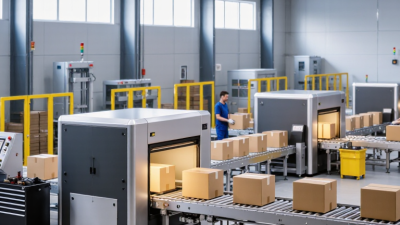
Top Automatic Stretch Wrap Machines for Global Buyers - Compare Machine Throughput in Pallets per Hour
| Machine Configuration | Typical Throughput | Loading and Wrapping Method | Typical Application | Key Selection Considerations |
|---|---|---|---|---|
| Semi-automatic turntable wrapper | 10–20 pallets per hour | An operator places and removes each pallet; the load rotates on a turntable. | Low-volume shipping areas and operations with varied pallet sizes. | Operator time, load stability, film pre-stretch, and the number of wraps per load. |
| Automatic turntable wrapper | 20–40 pallets per hour | Conveyors feed pallets onto a rotating platform; automatic film cutting and attachment may be included. | Steady, moderate-volume production and distribution lines. | Infeed and outfeed conveyor speed, pallet positioning, and whether film handling is fully automatic. |
| Automatic rotary-arm wrapper | 30–60 pallets per hour | The pallet stays stationary while a rotating arm applies film around the load. | Loads that are tall, lightweight, unstable, or difficult to rotate safely. | Arm speed, load dimensions, guarding, and the stability of the pallet during wrapping. |
| Rotary-ring wrapper | 60–120 pallets per hour | A rotating ring carries the film carriage around a stationary pallet moving through the wrapping station. | Higher-volume lines requiring continuous or near-continuous operation. | Conveyor layout, ring speed, film-carriage control, and line accumulation capacity. |
| High-speed rotary-ring system | 100–180 pallets per hour | A high-speed ring wraps pallets in an integrated conveyor line, often with automatic film handling. | High-throughput manufacturing and distribution facilities with consistent pallet flow. | Actual line rate, pallet spacing, film-change time, maintenance access, and upstream/downstream equipment capacity. |
Throughput note: These are indicative industry ranges, not guaranteed machine ratings. Actual pallets per hour depend on pallet dimensions and weight, wrap recipe, film changes, conveyor spacing, operator involvement, and line uptime. Compare supplier cycle-time specifications using the same load and wrap requirements.
Film Compatibility: Evaluate 200–300% Pre-Stretch and Containment Force
Automatic stretch wrappers are often compared by speed, but film compatibility deserves equal attention. A machine rated for 200–300% pre-stretch can reduce film use, provided the film suits the load and wrapping pattern. A stated percentage can be misleading. Ask how the supplier defines pre-stretch, since calculations and testing methods may differ. Small details matter.
Containment force describes how firmly the wrapped film holds a load together. Too little force can allow cartons to shift during handling. Too much may crush light boxes or distort soft packages. Measure force on a representative load, rather than judging tension by appearance alone. Not always obvious.
Match film type, thickness, and pre-stretch settings to the sharp edges, weight, and stability of the products. Run trials with the actual load, then check the corners and lower layers for damage or movement. Record both film consumption and containment-force results. The best setting may not be the machine’s maximum stretch; it is the setting that protects the load consistently. It is easy to overvalue the percentage and overlook how uneven pallets behave.
Global Buyer Checklist: Verify Power, Safety Compliance, and Service Support
For global buyers, a stretch wrapper’s nameplate matters as much as its film capacity. Confirm site voltage, phase, frequency, plug type, and available circuit protection before ordering. A 230 V, three-phase machine may not suit a 400 V, 50 Hz plant without an approved configuration. The IEA’s 2011 motor-systems analysis estimated that electric motor systems use about 45% of global electricity, making motor efficiency and operating hours worth checking. Ask for the machine’s rated load and duty cycle, not just its headline speed.
Safety documents need practical review. Check guarding around the turntable, emergency-stop access, and safe threading procedures. Ask which standards and conformity documents apply in the destination market; ISO 12100 and IEC 60204-1 are useful references, but they do not replace local requirements. OSHA estimates that effective lockout/tagout practices prevent about 120 deaths and 50,000 injuries annually in the United States. A certificate folder alone proves little. Request wiring diagrams, risk-assessment documents, and operator instructions in a language the site team can use.
Tips: Before purchase, ask for a written service response time, remote troubleshooting hours, and a spare-parts list with lead times. Confirm who can diagnose faults locally. Small detail, big difference. Then test the proposed power setup and safety stops during commissioning; paperwork can miss what a real shift reveals.
Related Posts
-
How to Choose the Best Pallet Wrapping Machine for Your Business Needs?
-
Top Used Pallet Wrapping Machines for Global Buyers in 2026?
-
Top Pallet Shrink Wrap Machines for Global Buyers?
-
How to Choose the Right Automatic Stretch Wrap Machine for Your Needs?
-
7 Best Automatic Strapping Machines for Global Buyers
-

China Top Automatic Bagging Machine Manufacturers?