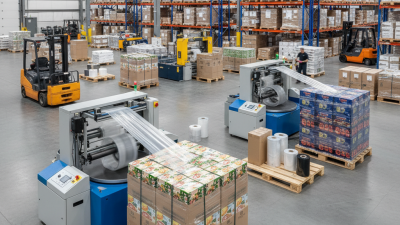




Top Pallet Shrink Wrap Machines for Global Buyers?
Choosing a pallet shrink wrap machine is rarely as simple as comparing prices. Global buyers must examine load size, film type, production speed, and local power requirements. A machine that performs well in a dry warehouse may struggle in a humid port environment. Small details matter. Film tension matters.
Dr. Susan M. Selke, a respected packaging researcher, once stated, “Packaging must protect products throughout the distribution system.” This principle remains highly relevant when evaluating stretch and shrink wrapping equipment. The best pallet shrink wrap machine should create stable, consistent loads without crushing cartons or wasting film. Buyers should inspect sealing quality, temperature control, conveyor compatibility, and operator safety features. Remote diagnostics can also reduce downtime when technical support is far away.
This guide compares leading machine types for international purchasing decisions. It considers automatic, semi-automatic, and high-output systems. It also reviews installation conditions, maintenance access, replacement parts, and user training. A machine with impressive speed may still be a poor choice for irregular pallets. That is easy to overlook. No model fits every warehouse. Buyers may need to balance speed against flexibility, and automation against budget. Testing real pallets before purchase remains the most reliable step. Even then, results can vary with film quality, load weight, and operator habits. The following overview aims to make those differences clearer for global buyers.
What Are Pallet Shrink Wrap Machines and How Do They Work?
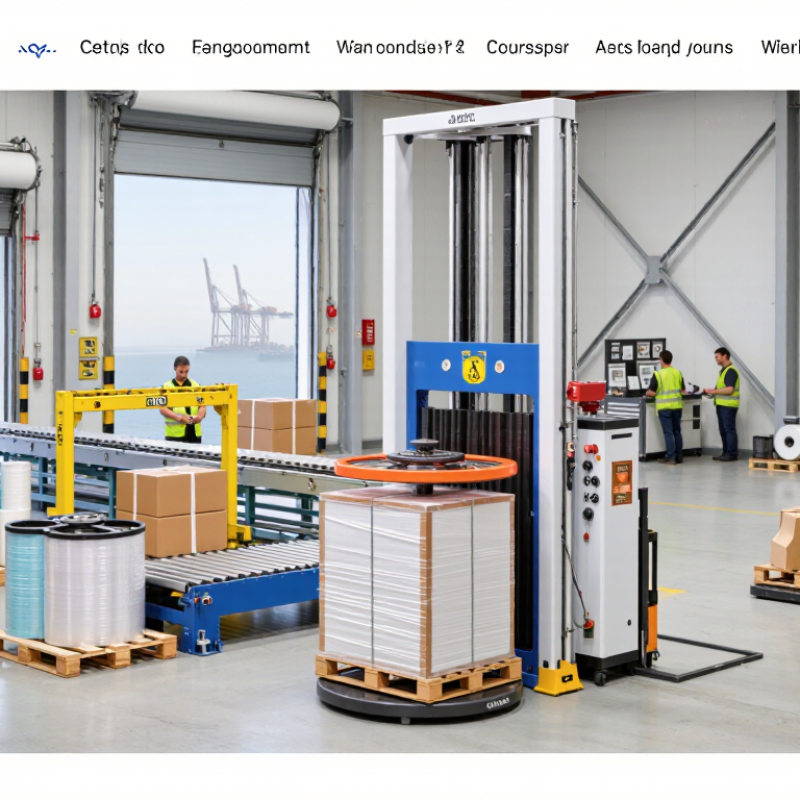
Pallet shrink wrap machines protect stacked goods by enclosing them in heat-shrinkable plastic film. The machine places the film around a loaded pallet. Heat then contracts the film tightly around the products. This creates a cleaner unit load and helps reduce dust, moisture, and movement during handling.
A typical system includes a film holder, sealing frame, cutting unit, and heating chamber. The operator sets pallet dimensions, film tension, sealing temperature, and heating time. The machine may rotate the pallet or move the film around it. Sensors can detect load height and reduce unnecessary film use. Proper settings depend on product shape, film thickness, and pallet stability.
The process looks simple. It is not always consistent. Uneven cartons may create loose corners or trapped air. Excessive heat can damage sensitive packaging. Insufficient heat may leave weak seals. Experienced operators test a few loads before choosing final settings. They also inspect film tension, seal strength, and pallet edges during production. Global buyers should check power requirements, safety guarding, service access, and available spare parts. A machine suited to dry warehouse goods may perform poorly in cold or humid conditions. These details are easy to overlook.
Main Types of Pallet Shrink Wrap Machines for Global Buyers
Pallet shrink wrap machines generally fall into three groups: chamber, hood, and continuous systems. Chamber machines enclose one loaded pallet, then apply controlled heat. They suit irregular loads and smaller production lines. Hood systems pull a pre-sized film cover over the pallet. A heated hood shrinks the film evenly around cartons, drums, or trays. Continuous systems combine film feeding, sealing, and heating for higher throughput. They work best with stable pallet dimensions and predictable schedules.
According to Smithers’ report, The Future of Global Stretch and Shrink Film to 2028, demand is being shaped by automation, material reduction, and stronger load protection. That trend makes machine selection more technical. A hood system may reduce manual handling, but it needs accurate film sizing. Chamber systems offer flexibility, though their cycle time can limit output. Continuous equipment saves labor, yet setup errors become expensive quickly.
PMMI reports that labor availability remains a major packaging automation concern in its recent industry outlook. Buyers should test real pallets before signing a specification. Check corner protection, film memory, heat exposure, and fork-truck clearance. Watch the seal area closely. It often reveals weak settings.
One detail is easy to miss. Film savings do not always mean lower operating costs. Thin film can tear during transport. The “best” machine may still require redesigning pallet patterns, and that is where many projects become less perfect.
Key Features That Affect Machine Performance and Efficiency
Top Pallet Shrink Wrap Machines for Global Buyers?
Machine performance depends on more than wrapping speed. Film carriage control, sealing temperature, and conveyor stability directly affect load security. A reliable pallet shrink wrap machine should maintain consistent film tension around uneven cartons. Poor tension creates loose corners, torn film, and unnecessary material use.
The PMMI State of the Industry reports continue to identify labor availability and automation as major packaging concerns. This supports machines with recipe storage, automatic film cutting, and simple operator controls. Energy use also matters. The U.S. Department of Energy reports that compressed-air systems can lose 20% to 30% of their output through leaks, although shrink systems usually use less air than many packaging lines. Efficient heaters, standby modes, and insulated sealing areas can still reduce waste. In practice, a faster cycle is not always a better cycle. Excessive speed may damage unstable loads.
Tips: Test the machine with your actual pallets, film thickness, and load weights. Check edge protection, sensor accuracy, spare-part access, and voltage compatibility. Ask for measured film consumption, not estimated savings. These details often expose weak assumptions.
Smithers’ packaging research shows continued growth in global flexible-film consumption, increasing pressure to control film waste. Pre-stretch ratios, adjustable wrapping programs, and accurate film-break detection can improve efficiency. However, settings still need human review. Dust, cold warehouses, and irregular pallets can change results. A machine may perform perfectly in a showroom and behave differently beside a busy loading dock.
How to Choose the Right Pallet Shrink Wrap Machine
Choosing the Right Pallet Shrink Wrap Machine for Global Buyers
Selecting a pallet shrink wrap machine starts with the load, not the machine’s appearance. Measure pallet length, width, height, and weight across normal shipments. Measure twice. Uneven cartons, sharp corners, and unstable loads need stronger film control. A machine that handles only standard pallets may struggle with mixed cargo. That matters.
Check the required film type, width, thickness, and shrinking method. Some operations need heat-shrink film, while others use stretch film without a heat tunnel. Confirm compatibility before comparing speed claims. Ask for tested output using your actual pallet patterns. A supplier’s demonstration is more useful when it shows wrapping tension, film overlap, and corner protection. I once saw a fast machine create loose tops because the settings ignored load height.
Production volume should guide automation. Low-volume warehouses may prefer simple controls and quick changeovers. High-volume facilities usually need powered conveyors, automatic film cutting, and repeatable programs. Review electrical standards, available floor space, ventilation, and operator access in your country. Safety guarding, emergency stops, and clear instructions should be standard, not optional. Keep replacement parts realistic to source. A technically advanced machine becomes a poor investment when one sensor causes weeks of downtime. Ask about training, remote support, maintenance intervals, and service response times. I would also request references from warehouses handling similar goods. Perfect equipment does not exist. Good selection comes from matching real operating conditions with measurable requirements.
Top Pallet Shrink Wrap Machines for Global Buyers? - How to Choose the Right Pallet Shrink Wrap Machine
| Machine Configuration | Typical Application | Typical Pallet Size (L × W × H) |
Typical Output | Film Type and Thickness | Heating Method | Typical Power Requirement | Main Advantages | Key Limitations | Best Choice When |
|---|---|---|---|---|---|---|---|---|---|
| Manual Shrink Hood System | Small warehouses, seasonal production, and occasional pallet protection | Up to approximately 1,200 × 1,000 × 2,000 mm |
5–15 pallets/hour | Polyolefin or polyethylene shrink film; typically 50–150 microns |
Manual heat gun or separate heating unit | Approximately 2–8 kW | Low purchase cost, flexible operation, simple setup, and limited floor-space requirements | Inconsistent sealing and shrinking; labor-intensive; lower throughput | Pallet volume is low or product dimensions change frequently |
| Semi-Automatic Shrink Hood Machine | General manufacturing, food distribution, and warehouse dispatch operations | Up to approximately 1,400 × 1,200 × 2,200 mm |
10–30 pallets/hour | Polyethylene or polyolefin film; typically 60–150 microns |
Integrated hot-air circulation or heating chamber | Approximately 8–25 kW | More uniform film contraction, adjustable cycle settings, and better labor productivity | An operator may still need to position the pallet and apply the hood | A business needs a balance between investment cost and operating efficiency |
| Automatic Shrink Hood Machine | High-volume manufacturing, export packing, and continuous distribution lines | Up to approximately 1,600 × 1,300 × 2,400 mm |
25–60 pallets/hour | Heavy-duty polyethylene shrink film; typically 80–200 microns |
Automatic hood application with hot-air shrinking | Approximately 20–60 kW | Consistent packaging quality, reduced manual handling, programmable cycles, and high repeatability | Higher capital cost, more installation requirements, and greater maintenance complexity | The line operates at a stable volume with standardized pallet dimensions |
| Automatic Side-Seal and Shrink Tunnel System | Products requiring a sealed film enclosure before pallet consolidation or transport | Product and pallet dimensions depend on tunnel opening; commonly up to about 1,500 × 1,200 × 2,000 mm | 15–45 pallets/hour | Polyolefin or polyethylene center-fold film; typically 50–150 microns |
Continuous sealing followed by hot-air shrink tunnel | Approximately 15–50 kW | Clean sealed edges, good presentation, repeatable film usage, and easy line integration | Requires accurate film selection and sufficient conveyor and tunnel space | The package must be fully enclosed and the production line uses consistent dimensions |
| High-Speed Automatic Shrink Hood Line | Beverage, consumer goods, building materials, and large export distribution centers | Custom engineered; often up to approximately 1,800 × 1,400 × 2,500 mm |
45–100+ pallets/hour | Heavy-duty polyethylene film; typically 80–200 microns |
Automated hooding, controlled hot-air circulation, and conveyor transfer | Approximately 40–100+ kW | Maximum throughput, reduced direct labor, strong process consistency, and automated line control | High investment, larger footprint, and requires trained technical support | Throughput, uptime, and integration with upstream and downstream equipment are top priorities |
Global Purchasing Factors: Safety, Standards, Service, and Cost
Top Pallet Shrink Wrap Machines for Global Buyers?
Global purchasing starts with safety, not speed. OSHA’s FY2023 Top 10 list recorded 1,644 machine-guarding violations, showing how routine equipment can create serious exposure. Buyers should request risk assessments aligned with ISO 12100 and safety-control documentation based on ISO 13849-1. Check emergency stops, guarded film carriages, access doors, and heat-sealing areas. A clear English manual is useful, but local-language instructions may be required. Do not assume one certificate satisfies every destination.
Standards also affect installation and customs clearance. The EU Machinery Regulation 2023/1230 will replace the Machinery Directive from January 2027, so export planning should consider the transition. Electrical compatibility matters too. Confirm voltage, frequency, plug configuration, and electromagnetic compatibility before ordering. A machine that wraps 80 pallets per hour may still fail if it cannot integrate with the site’s conveyor height or pallet dimensions. Measure the floor space carefully.
Service quality often decides the real cost. PMMI’s 2024 packaging machinery outlook identifies labor availability, automation, and uptime as major purchasing pressures. Ask for response times, spare-parts stock, remote diagnostics, and technician coverage in the destination country. Total cost should include film consumption, preventive maintenance, training, energy, and downtime. A low quotation can mislead. I would compare three-year operating records, not only purchase prices. Some specifications remain unclear until the first damaged load appears.
Top Pallet Shrink Wrap Machines for Global Buyers
Global Purchasing Factors: Safety, Standards, Service, and Cost
This procurement planning benchmark gives the highest priority to operator safety and international compliance, followed by after-sales service and total cost of ownership. Buyers should verify risk assessment under ISO 12100, machinery control-system requirements under ISO 13849-1, electrical safety under IEC 60204-1, and applicable regional conformity requirements such as CE marking before purchase. Actual weighting should be adjusted for throughput, labor availability, film usage, installation conditions, and local regulations.
Related Posts
-
How to Choose the Best Pallet Wrapping Machine for Your Business Needs?
-
Top Used Pallet Wrapping Machines for Global Buyers in 2026?
-
Why Choose a Used Pallet Wrapping Machine for Your Business Needs?
-
Top 10 Tips for Choosing the Best Pallet Shrink Wrap Machine for Your Business
-
How to Choose the Best Pallet Shrink Wrap Machine for Your Business Needs
-
What is a Pallet Shrink Wrap Machine and How Does It Work?