


2026 Top Pallet Strapping Machines for Global Buyers
Choosing the right pallet strapping machine can influence warehouse speed, load stability, and long-term operating costs. Global buyers need more than a product photograph or an attractive quoted price. They must compare strap material, pallet dimensions, cycle speed, tension control, sealing methods, and available service support. Small details matter. A weak seal can become an expensive problem during storage or transport.
This guide reviews leading pallet strapping machine options for international purchasing teams in 2026. It considers automatic, semi-automatic, and integrated systems used across manufacturing, logistics, food packaging, and distribution facilities. Each category serves a different workflow. A high-volume plant may need automatic feeding and consistent tension, while a smaller warehouse may value simple controls and easier maintenance. There is no universal best model.
Performance claims should be checked against real operating conditions. Ask suppliers for test results using your actual pallet sizes, strap specifications, and production rhythm. Confirm electrical requirements, guarding features, spare-parts availability, operator training, and warranty coverage before committing. These checks often reveal costs hidden behind the initial quotation. They also support safer, more reliable purchasing decisions.
Some recommendations may require further verification because supplier specifications can change. Installation quality can also affect results more than expected. Buyers should treat this guide as a practical starting point, not a substitute for site testing or professional equipment assessment. A dependable machine is not merely fast; it should deliver repeatable tension, clean seals, manageable maintenance, and stable support throughout its working life.
What Are Pallet Strapping Machines and How Do They Work?
2026 Top Pallet Strapping Machines for Global Buyers
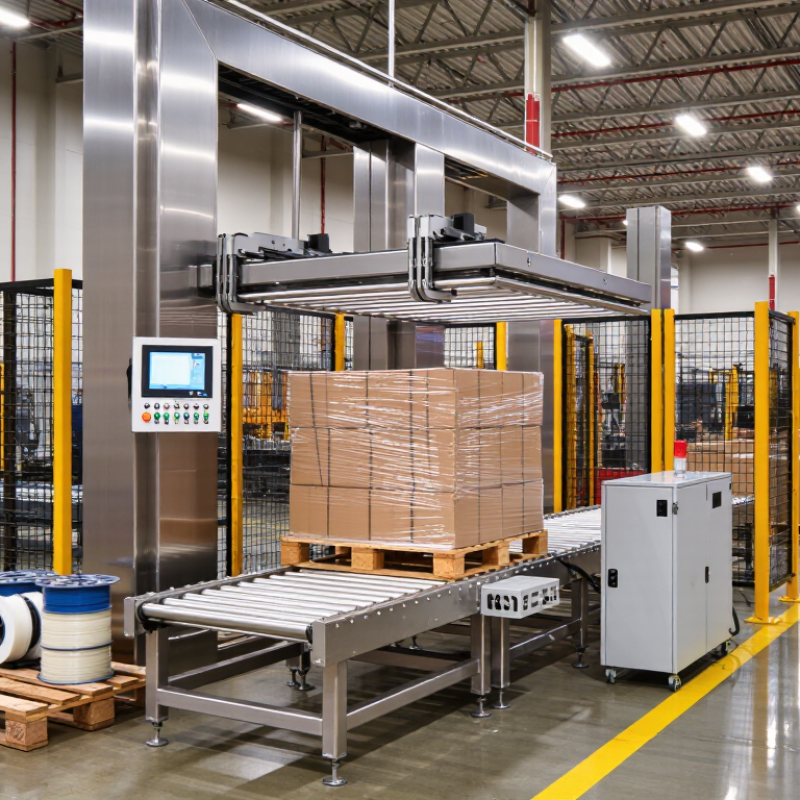
Pallet strapping machines secure cartons, bags, and bundled products with plastic or steel strap. They reduce load movement during storage and transport. A typical unit uses a strap dispenser, guide arch, tension motor, sealing head, and control panel. The pallet enters the working area, either manually or on a conveyor. Sensors detect its position. The machine feeds strap around the load and pulls it tight. The sealing head then joins the strap by heat, friction, or another approved method.
The operating cycle is simple, but settings matter. A tension motor must hold the load firmly without crushing cartons or bending weak products. For example, a pallet of bottled goods may need steady tension, while lightweight boxes need gentler pressure. The strap width, surface condition, and package shape also affect performance. Dust on the sealing area can weaken a joint. I have found that small alignment errors often create larger delays than expected. They deserve attention.
Global buyers should examine cycle speed, adjustable tension, strap compatibility, power requirements, and service access. A machine rated for high output may waste space in a small warehouse. Automatic models support consistent production, while semi-automatic units can suit changing pallet sizes. Operators should inspect guides, remove strap fragments, and test seals during each shift. One detail is easy to miss: maximum tension is not always better. Reliable results come from matching the machine to the load, packaging material, and daily working conditions.
2026 Top Pallet Strapping Machines for Global Buyers - What Are Pallet Strapping Machines and How Do They Work?
| Machine configuration | Typical load and application | Compatible strap | Typical strap width | Typical tension range | Typical throughput | Sealing method | Automation level | Main selection advantage |
|---|---|---|---|---|---|---|---|---|
| Semi-automatic pallet strapping machine | Low-to-medium volume palletizing; operator positions the strap and starts each cycle | Polypropylene (PP); some models support polyester (PET) | Usually 9–16 mm | Approximately 15–80 kgf, depending on the strap and machine | About 1–3 straps per minute | Heat sealing or friction welding | Operator-assisted | Lower initial cost, flexible placement, and simple operation |
| Automatic top-press pallet strapping machine | Uniform pallet loads that require top compression before strapping | PP or PET, selected according to load weight and stability | Usually 9–16 mm | Approximately 30–120 kgf | About 2–6 straps per minute | Heat sealing or friction welding | Automatic cycle with powered strap feeding | Improves load stability and helps reduce shifting during transport |
| Automatic vertical pallet strapping machine | Pallets with accessible strap paths from the top and underside | PET, PP, or steel strap on suitable heavy-duty configurations | Commonly 9–19 mm; wider steel strap options may be available | Approximately 50–400 kgf, depending on configuration | About 1–4 straps per minute | Friction welding for plastic strap; sealing tools or clips for steel strap | Automatic or semi-automatic | Suitable for heavy or tall loads requiring vertical restraint |
| Rotary-arm pallet strapping machine | High-volume lines and unstable loads that should remain stationary | Primarily PP or PET | Usually 9–16 mm | Approximately 30–150 kgf | About 2–8 straps per minute | Heat sealing or friction welding | Fully automatic; often conveyor-integrated | The arm moves around the load, minimizing pallet movement |
| Ring-type pallet strapping machine | Continuous packaging lines requiring fast horizontal or vertical strapping | PP or PET | Usually 9–16 mm | Approximately 30–150 kgf | About 3–10 straps per minute | Heat sealing or friction welding | Fully automatic | High repeatability and easy integration with conveyors and palletizers |
| Heavy-duty steel strapping machine | Steel products, construction materials, coils, blocks, and very heavy loads | Steel strap | Commonly 16–32 mm, depending on load requirements | Approximately 200–1,000 kgf or more on specialized systems | About 1–4 straps per minute | Notched seal, metal seal, or manual/powered steel strapping tool | Semi-automatic to automatic | High tensile strength and strong resistance to heat and impact |
| Step | Machine action | Operational result |
|---|---|---|
| 1. Load positioning | The pallet is placed on the conveyor, platform, or strapping station. | Sensors or an operator confirm that the load is in the correct position. |
| 2. Strap feeding | The feed motor sends strap through the guide, around the pallet, and back to the sealing head. | A complete strap loop is formed around the selected part of the load. |
| 3. Tensioning | A powered tension wheel pulls the strap until the programmed tension or travel limit is reached. | The load is compressed or restrained to improve handling and transport stability. |
| 4. Sealing or welding | Plastic strap ends are heat-sealed or friction-welded; steel strap is joined with a seal, notch, or tool. | The strap joint locks the applied tension around the pallet. |
| 5. Cutting and reset | The machine cuts the strap tail and returns the feed system to its starting position. | The pallet is ready for the next strap, conveyor transfer, storage, or shipment. |
Key Machine Types for Different Pallet Packaging Requirements
In 2026, pallet strapping machines should be chosen by packaging conditions, not impressive speed figures. A warehouse shipping mixed cartons may need a semi-automatic machine with adjustable tension. Operators can position each pallet, guide the strap, and inspect unstable loads before sealing. This setup suits lower volumes and frequent pallet-size changes. It also exposes a weakness: manual positioning can create uneven strap paths. Small errors matter.
Fully automatic inline machines fit distribution centers with steady conveyor flow. They can strap a pallet without stopping the line, reducing handling time. Dual-strap models are useful for tall loads, narrow cartons, or products that shift during transport. Rotary systems work well when pallets arrive from several directions. In my experience, the best results depend on alignment, not only motor power. A dusty conveyor or damaged pallet can still cause failed cycles. Keep that in mind.
For irregular or oversized pallets, horizontal strapping machines can secure loads around their center of gravity. Vertical machines apply tension from above and suit stable, stackable products. Heat-seal and friction-weld systems have different maintenance needs, so buyers should check local service skills and spare-part access. Test the machine with real strap, corner protectors, and the heaviest approved load before purchase. Do not trust a showroom pallet. Record seal strength, cycle time, noise, and strap waste during a week-long trial. Some decisions remain imperfect. A cheaper machine may cost more when adjustments become daily work.
Essential Features to Compare Before Choosing a Machine
2026 Top Pallet Strapping Machines for Global Buyers
Essential Features to Compare Before Choosing a Machine
Choosing a pallet strapping machine requires more than comparing cycle speed. Check the supported pallet dimensions, load height, strap width, and material compatibility. A machine should apply consistent tension without crushing cartons or shifting fragile loads. Ask for test results using your actual products. Small details matter. Examine the sealing method, strap alignment, corner protection, and cut quality after repeated cycles. Poor alignment often appears only after several hours of operation.
Safety and maintainability deserve equal attention. Look for guarded moving parts, emergency stops, clear control panels, and simple access to wear components. Confirm whether operators can adjust tension, heat, and cycle timing without complicated procedures. A stainless or coated frame may suit humid environments, but the finish alone does not guarantee long service life. Review electrical requirements, compressed-air needs, spare-part availability, and technician response times. Specifications can mislead. Real factory conditions are less perfect.
Tips: Measure your busiest pallet sizes before requesting quotations. Record strap consumption during a full shift. Compare actual throughput, not advertised maximum speed. Leave room for maintenance access around the machine. If possible, run a trial with uneven loads and recycled cartons. This may reveal instability that a clean demonstration hides. Also check training materials and inspection records. Reliable suppliers should explain limitations clearly, not only highlight performance figures.
How to Evaluate Speed, Strap Quality, Safety, and Maintenance
2026 Top Pallet Strapping Machines for Global Buyers
Speed should be measured on finished pallets, not empty-cycle demonstrations. PMMI’s 2024 State of the Industry report identifies labor availability as a continuing automation challenge. Therefore, buyers should record output during normal loading, film wrapping, and pallet movement. A practical test includes at least 30 consecutive pallets. Note jams, strap breaks, and operator adjustments.
Strap quality depends on tension consistency, weld strength, and alignment. The Association of Plastic Recyclers reports that packaging design affects recycling compatibility, so material selection deserves careful review. Test the machine with the intended strap width and recycled-content grade. Check welds after cold storage and vibration. Small defects become loose cartons during long transport. Perfect results are uncommon.
Safety evaluation should include guarding, emergency stops, access doors, and lockout procedures. ISO 12100 provides a recognized framework for machinery risk assessment. Maintenance teams should inspect heaters, cutters, guides, and tension components on a defined schedule. Ask for replacement-part lead times and service records. PMMI research also links skilled-labor shortages with maintenance pressure, making simple diagnostics valuable. A fast machine is not efficient when one sensor stops production for hours. I would not trust a quoted uptime percentage without site evidence.
2026 Top Pallet Strapping Machines for Global Buyers
How to Evaluate Speed, Strap Quality, Safety, and Maintenance
The comparison uses a 0–100 evaluation index based on typical industrial operating ranges: throughput, strap-tension consistency, automatic safety controls, and routine maintenance workload. High-speed systems generally improve productivity, while simpler machines usually provide easier maintenance and lower operational complexity. Actual results vary by pallet size, load stability, strap material, and line configuration.
Selecting the Best Pallet Strapping Machine for Global Operations
Choosing a pallet strapping machine starts with the load, not the catalog photograph. Measure pallet dimensions, product weight, surface stability, and daily production volume. A compact warehouse may need a semi-automatic machine, while export facilities often require continuous, adjustable performance. Test several strap widths and tensions. Over-tightening can crush cartons or damage fragile edges.
Global operations add practical complications. Confirm voltage, frequency, plug standards, and available compressed air before purchasing. Machines should support locally available strap materials and replacement parts. In humid ports or dusty warehouses, protected controls and simple cleaning access matter. Ask for safety documentation, operator training, and remote troubleshooting procedures. These details reduce delays when technical support is several time zones away.
Do not judge speed alone. A faster cycle may create more strap waste, unstable loads, or frequent stoppages. During site trials, record cycle time, seal quality, tension consistency, and operator effort. Leave room for human error. Even a reliable machine can perform poorly when pallets vary in height. A careful buyer should request sample testing with real products, then review maintenance records, warranty limits, and long-term operating costs before approval.
Related Posts
-
7 Best Pallet Strapping Machines for Global Buyers?
-
7 Best Pallet Banding Machines for Global Buyers?
-
How to Choose the Best Pallet Banding Machine for Your Needs?
-
Top 5 Best Semi Automatic Strapping Machines for Efficient Packaging Solutions?
-
How to Choose the Right Automatic Stretch Wrap Machine for Your Needs?
-
2026 Best Stretch Wrap Machine for Efficient Packaging Solutions?