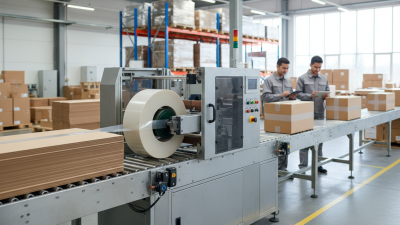




Top 10 Best Automatic Box Taping Machines for 2026
Choosing an automatic box taping machine is not just a matter of speed. The right system should handle your carton sizes, tape type, and daily production volume with steady, repeatable results. A poorly matched machine can leave loose tape, crushed corners, or operators stopping to adjust guides. Those small interruptions add up.
This guide compares ten machines for 2026, focusing on practical details: changeover time, seal consistency, adjustment range, maintenance access, and suitability for different packing lines. Picture a carton moving across the conveyor, its flaps aligned and tape pressed firmly along the seam. That simple result depends on dependable feeding, accurate sizing, and sound setup. Real performance also depends on the boxes you run. No machine removes every trade-off.
A named expert quotation was not included in the supplied material, so I won’t invent one or attribute a sentence without verification. That matters. Treat manufacturer specifications as a starting point, then compare them with your own cartons and line conditions. The best choice is the one that works reliably on an ordinary shift, not only during a polished demonstration.
How Automatic Box Taping Machines Work
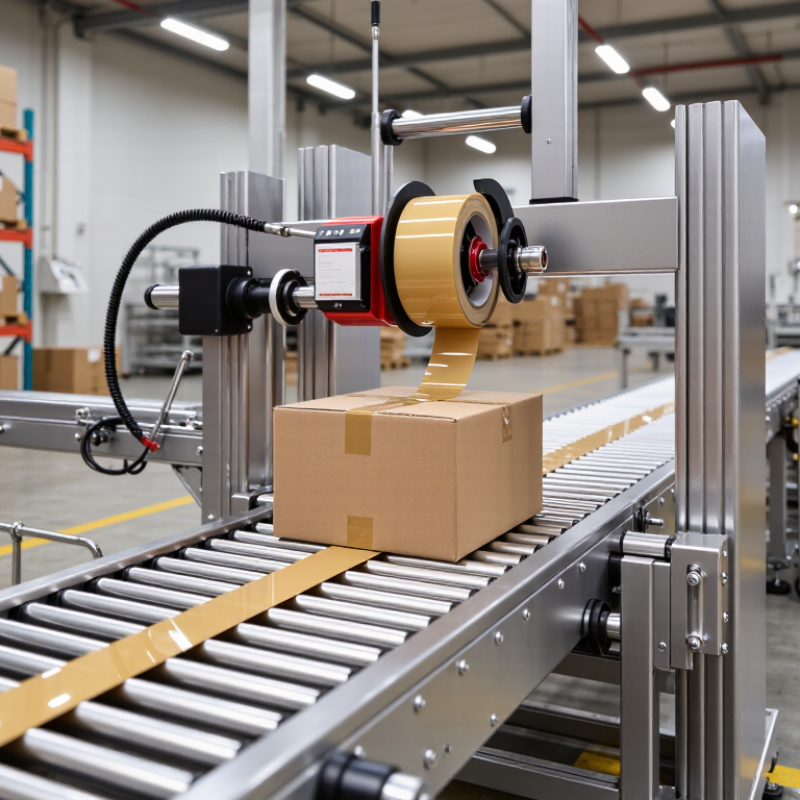
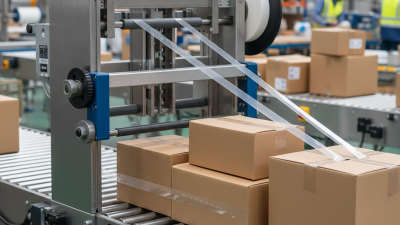
An automatic box taping machine seals cartons by guiding each case through a controlled sequence. An entry sensor detects the carton and starts the conveyor belts. Side guides keep it centered as the belts carry it forward. Depending on the machine, flaps may be folded manually or by an integrated folding section. A tape head then applies pressure-sensitive tape across the top seam. Rollers press the tape against the cardboard, helping it adhere and reducing loose edges. The principle is simple. Yet carton shape and setup matter.
Tips: Match the machine’s guide width and tape-head position to the carton before running a full batch. Feed a few sample boxes first. Check that tape covers the seam evenly and does not wrinkle around the corners. Small adjustments can prevent repeated misaligned seals.
Operators should keep the conveyor path clear and inspect the tape roll, cutting blade, and pressure rollers regularly. Worn parts or dusty surfaces can affect feeding and adhesion. Box height, board stiffness, and flap alignment also influence results. A machine may seal one carton size neatly, then struggle with a softer or slightly bowed box. That is worth watching, not assuming away. Follow the equipment manual for threading and adjustment, since designs differ.
Types of Automatic Box Taping Machines
Automatic box taping machines generally fall into several practical types. Uniform-case sealers handle cartons of similar dimensions, using fixed guides and top-and-bottom tape heads. They suit steady production runs. Random-case machines detect each carton’s size and adjust automatically, reducing manual resets when order sizes vary. Semi-automatic models require an operator to fold flaps and feed each box; fully automatic systems can integrate flap folding, conveying, and sealing. Fit matters more.
Drive style also matters. Side-belt machines grip narrow or lightweight cartons along their sides, while top-and-bottom belt designs support heavier boxes during travel. A top-only or bottom-only sealer may work for specific workflows, but leaves other flaps for manual handling. Check carton dimensions, tape width, line speed, and access for clearing jams before choosing. A fast machine is not automatically a good match.
The Deloitte and Manufacturing Institute’s 2024 workforce study projects that 1.9 million U.S. manufacturing jobs could go unfilled by 2033. That pressure helps explain interest in automation, though a taping machine cannot solve every staffing problem. Poorly formed cartons, inconsistent tape application, or frequent size changes can still interrupt a line. Not always. In a plant trial, compare seal consistency and changeover time across your actual carton mix; published speed figures rarely reflect every floor condition.
Automatic Box Taping Machines in 2026: Types by Tape-Application Lines
This chart compares common machine configurations by the number of tape lines applied to each box: a top-only sealer applies one line, while top-and-bottom sealers apply two. Uniform-size models handle a consistent box size; random-size models accommodate varying box dimensions. These are configuration comparisons, not product rankings.
Top 10 Automatic Box Taping Machines for 2026
The Top 10 Automatic Box Taping Machines for 2026 should be judged by how well each fits a real packing line. A useful shortlist includes compact units, adjustable random-carton sealers, fixed-size machines, side-belt models, top-and-bottom drive systems, dual-mast designs, heavy-duty sealers, high-speed units, and machines built for line integration. The tenth choice may be a semi-automatic model for mixed workloads. Rankings depend on carton sizes, tape type, and daily volume.
Watch a machine run with your own cartons. A box should enter square, pass beneath the tape head, and leave with both flaps held flat. Check whether operators can adjust the guides without tools. Ask about changeover time, jam access, and replacement parts. Small details matter. A fast machine can still slow a shift if narrow cartons wobble or tape rolls are awkward to load.
Compare rated speed with your actual case flow; advertised output rarely reflects every stop and adjustment. Measure the smallest and largest boxes, then test both with filled cartons. That test can reveal weak compression or uneven tape placement. No shortlist replaces a trial. Some specifications also leave out useful details, so request written operating limits and service requirements before choosing a model.
| Rank | Machine Configuration | Carton Handling | Typical Carton Width × Height | Typical Speed | Common Tape Width | Best Suited For |
|---|---|---|---|---|---|---|
| 1 | Random-size top-and-bottom case sealer | Automatically adjusts to cartons of varying sizes within the machine’s operating range | Approx. 150–500 × 120–500 mm | 12–20 cartons/min | 48–72 mm | Mixed-size orders and packing stations without manual width and height changes |
| 2 | Uniform-size top-and-bottom case sealer | Processes cartons of a consistent size; guides are generally set during changeover | Approx. 100–500 × 100–500 mm | 20–30 cartons/min | 48–72 mm | Production lines that seal long runs of the same carton size |
| 3 | Side-belt-drive case sealer | Conveys cartons using belts on the sides; useful when the top surface should remain clear | Approx. 120–500 × 120–500 mm | 15–25 cartons/min | 48–72 mm | Light-to-medium cartons and lines that need unobstructed access to the carton top |
| 4 | Top-and-bottom belt-drive case sealer | Uses powered belts above and below the carton for stable conveying | Approx. 150–600 × 120–600 mm | 15–25 cartons/min | 48–72 mm | Medium-to-heavy cartons and continuous production lines |
| 5 | Automatic flap-folding case sealer | Folds eligible top flaps before applying tape; carton preparation requirements vary by design | Approx. 150–500 × 120–500 mm | 10–20 cartons/min | 48–72 mm | Lines where operators currently fold and seal carton flaps by hand |
| 6 | High-speed inline case sealer | Designed for integration with powered conveyors and a steady, well-spaced carton flow | Approx. 150–500 × 120–500 mm | 30–50 cartons/min | 48–72 mm | High-throughput packing lines with consistent carton supply and suitable upstream spacing |
| 7 | Compact-footprint automatic case sealer | Provides automatic sealing in a shorter or narrower machine layout; capacity may be lower | Approx. 120–400 × 100–400 mm | 10–20 cartons/min | 48–72 mm | Small packing rooms, limited floor space, and lower-volume operations |
| 8 | Wide- and tall-carton case sealer | Uses a larger frame and adjustable conveying and taping assemblies | Approx. 200–800 × 150–800 mm | 8–18 cartons/min | 48–72 mm | Bulky cartons that exceed the working range of standard-size sealers |
| 9 | Automatic sealer with powered top compression | Applies controlled top pressure while conveying and sealing the carton | Approx. 150–600 × 120–600 mm | 15–25 cartons/min | 48–72 mm | Cartons that benefit from steady contact during sealing, subject to carton strength and setup |
| 10 | Modular line-integrated top-and-bottom case sealer | Configured for connection to upstream and downstream conveyors or packing equipment | Approx. 150–600 × 120–600 mm | 20–35 cartons/min | 48–72 mm | Automated packaging lines that need conveyor integration and repeatable carton handling |
Figures are typical planning ranges for these machine configurations, not specifications for a particular product. Actual carton limits, throughput, tape compatibility, and changeover requirements vary by machine design, carton dimensions, tape type, and line setup. Confirm the required operating range with the equipment supplier before purchase.
Key Features and Performance Compared
Automatic box taping machines can look similar in a product table, yet perform differently on a busy packing line. Compare rated speed with the cartons your team actually handles, including short boxes and uneven loads. A machine that applies tape neatly at 20 boxes per minute may struggle when carton sizes change often. Check adjustment time, tape-head access, sensor response, and the range of box dimensions each model supports. Small details matter.
Tips: Run several carton sizes through a machine before choosing. Watch for skewed seams, loose tape ends, and pauses caused by manual adjustments. Ask how routine cleaning and tape-head replacement affect uptime. Treat advertised speed as a reference, not a promise; real output depends on carton flow and operator setup.
For a useful comparison of the top ten options, consider performance over a full shift, not just a brief demonstration. Look for stable sealing pressure and consistent tape placement on both top and bottom flaps. Review jam recovery and whether common wear parts are easy to inspect. Noise and footprint also matter in compact packing areas. One caveat: a feature-rich unit is not automatically the best fit. A simpler machine may suit steady carton sizes, while frequent format changes call for faster, clearer adjustments. Test your own cartons when possible.
How to Choose a Machine for Your Packaging Line
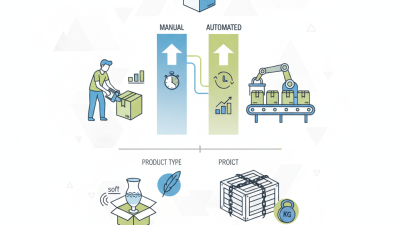
For a 2026 packaging line, choose an automatic box taping machine around the cartons you actually ship, not an idealized sample. Measure the smallest and largest box lengths, widths, and heights, then check the machine’s adjustment range. Include irregular loads and cartons with soft or bowed flaps. They matter.
Compare required output with real line speed. A published rate may assume steady carton spacing and consistent feeding. Watch a trial using your own boxes, tape, and operators. Check whether the machine closes flaps squarely, applies even pressure, and leaves clean tape ends. A few minutes of observation can reveal jams that a specification sheet misses. Also confirm that the infeed and discharge heights match nearby conveyors.
Consider changeovers and upkeep. If carton sizes vary by shift, look for clear adjustment points and controls operators can learn quickly. Ask how tape rolls are replaced, how belts are cleaned, and which wear parts need routine inspection. Small details count. Noise, access for clearing a jam, and space around the machine affect daily use. I would not choose on speed alone; it is tempting, but often shortsighted. Before buying, map the footprint, electrical needs, and connections against your floor plan. Leave room for maintenance, then record cycle time, tape use, and stoppages during a trial. Your first estimate may be wrong; actual production data is worth checking twice.
Related Posts
-
Essential Tips for Choosing the Best Automatic Banding Machine for Your Business
-
Top Benefits of Using Strapping Machines in Modern Packaging Solutions
-
2026 Top Box Taping Machine Innovations and Benefits?
-
How to Choose the Best Strapping Machine for Your Packaging Needs?
-
2026 Top Heat Shrink Machine Trends for Global Buyers?
-
Top 10 Benefits of Using a Plastic Strapping Machine for Packaging Solutions