




Why Choose Roll Thermal Paper for Your Business?
Roll Thermal Paper may look like a small purchasing decision, but every receipt depends on it. A busy checkout needs clean, readable print, reliable feeding, and rolls that fit the printer correctly. When paper jams or fades, queues grow and staff lose time. The details matter.
MarketsandMarkets estimated the global thermal paper market at about USD 4.0 billion in 2023 and projected it to reach USD 4.8 billion by 2028. That forecast points to sustained demand across retail, transport, healthcare, and other transaction-heavy settings. Market growth alone, however, does not prove that every roll is right for every business. Paper quality, roll dimensions, storage conditions, and printer compatibility still deserve careful checks. A low price can become costly if prints turn faint or the paper curls in a warm storeroom.
As a practical industry rule puts it, “Choose paper for the conditions it must survive, not just the price per roll.” Treat that as guidance, not a substitute for a verifiable expert quotation. A credible purchasing decision starts with a real test: print a sample, handle the receipt, and check whether the text stays legible. That small trial can reveal problems a product sheet misses. It is easy to overlook. When comparing Roll Thermal Paper, businesses should weigh consistent print performance, fit, and dependable supply alongside cost.
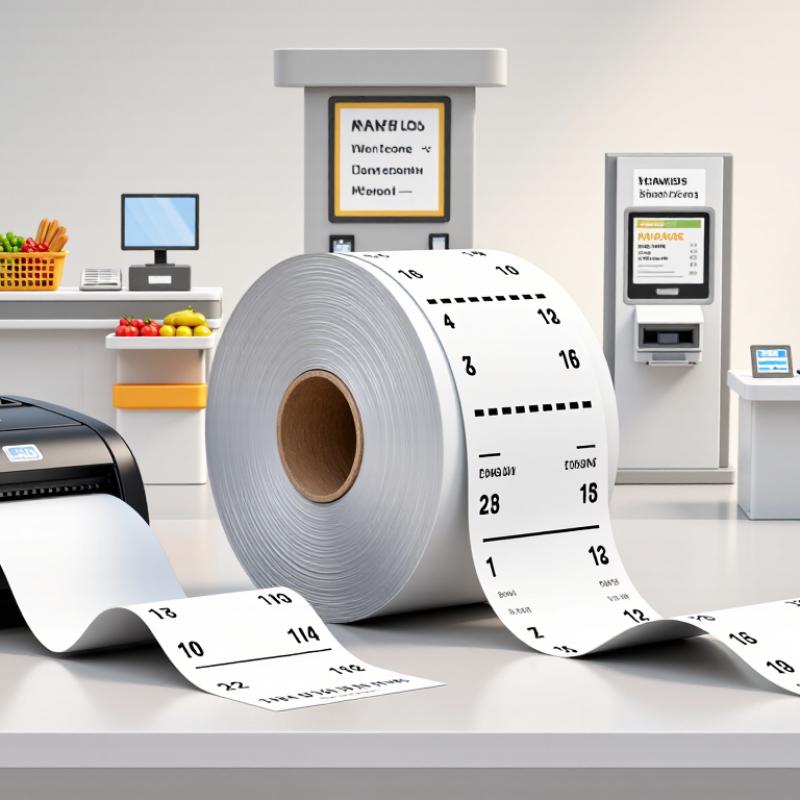
What Roll Thermal Paper Is and How It Produces Printed Images
Roll thermal paper is a paper roll with a heat-sensitive coating. It does not need ink cartridges or a separate ribbon in a direct thermal printer. The coating contains compounds that react to heat. When the printer’s thermal head heats selected points, those spots darken to form letters, numbers, or simple graphics. The printer creates an image one tiny dot at a time. Quiet and quick. This process makes thermal rolls common in receipts, queue tickets, and portable payment devices.
Tips: Match the roll width and core size to your printer. Check the loading direction; the coated side must face the thermal head. A test print can reveal pale output or incorrect loading. Store spare rolls away from sunlight, heaters, and damp counters.
Print quality depends on more than the paper. A dirty thermal head, worn parts, or unsuitable settings can make text faint or uneven. Coatings also vary, so two rolls may perform differently in the same device. This is easy to overlook when shopping by dimensions alone. Keep a sample receipt and check its contrast after storage. Heat, light, and time can cause prints to fade. The exact lifespan depends on the coating and storage conditions, so a receipt intended for long-term records may need a closer look.
| Data Dimension | What It Means | How It Works or Is Used | Business Consideration |
|---|---|---|---|
| Paper construction | A paper base coated with a heat-sensitive layer; some grades also include a protective topcoat. | The coated surface reacts to controlled heat from a thermal printhead. | Choose a grade suited to the printer and the document’s expected handling and storage conditions. |
| Image formation | Direct thermal printing creates an image on heat-sensitive paper without a separate ink ribbon. | The printer heats selected points on the paper. The coating darkens at those points to form text, numbers, or graphics. | The printer must support direct thermal media, and its printhead settings should match the paper specifications. |
| Printing supplies | Direct thermal systems use coated rolls rather than ink or toner for image creation. | The thermal printhead applies heat directly to the paper as it moves through the printer. | Fewer printing consumables can simplify routine supply changes, though paper rolls still need regular replenishment. |
| Roll format | Paper is supplied wound around a core, with roll width, roll diameter, and core size varying by printer and application. | A roll feeds a continuous web of paper through a compatible receipt, label, or ticket printer. | Check the printer’s specified width, maximum roll diameter, and core requirements before ordering. |
| Common applications | Receipts, transaction records, queue tickets, and certain labels are common uses for thermal media. | Thermal printers produce the required text and graphics directly onto the roll as needed. | Confirm that the paper grade and printer are appropriate for the application, especially for labels or records kept for long periods. |
| Print durability | Thermal images can be affected by heat, light, friction, and contact with certain chemicals, depending on the paper formulation and exposure. | The image is formed in the heat-sensitive coating rather than by depositing ink on the surface. | Store printed records according to the paper supplier’s guidance; use a more durable printing method when long-term archival retention is required. |
| Printer maintenance | The thermal printhead is the component that transfers heat to the paper. | Paper dust and residue can interfere with print quality or contribute to wear if allowed to build up. | Follow the printer manufacturer’s cleaning and maintenance instructions and use paper that meets the device specifications. |
| Key selection checks | Compatibility, paper grade, roll dimensions, and the intended life of the printed document. | These factors determine whether the roll feeds correctly and whether the image suits the intended use. | Compare product specifications with the printer manual and the operating environment before purchase. |