How to Choose the Best Utility Blower Fan for Your Needs?
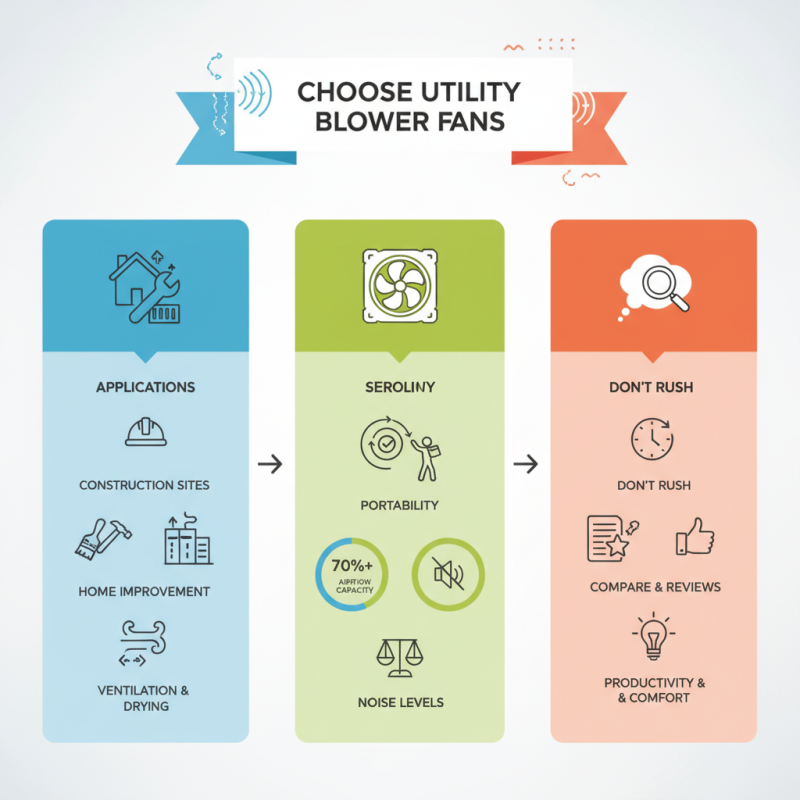
Choosing the right Utility Blower Fan is crucial for various applications, from construction sites to home improvement projects. According to a recent report by the Industrial Fan Association, the demand for effective ventilation and drying solutions has surged by over 30% in the last five years. This trend underscores the importance of selecting a blower fan that meets your specific needs. An appropriate utility blower can enhance air circulation, dry wet areas, and improve indoor air quality.
Not all utility blower fans are created equal. Factors such as airflow capacity, portability, and noise levels play a significant role in performance. A study indicated that over 70% of users prioritize airflow efficiency, which significantly impacts drying time and overall satisfaction. Choosing a fan that balances power and portability is essential for both professionals and DIY enthusiasts. However, many users often overlook the noise level, which can affect the working environment.
Before making a decision, consider where and how you will use the blower fan. Reflect on your unique requirements and don't rush the process. Take time to compare options and read user reviews. A thoughtful choice in this category can lead to remarkable improvements in productivity and comfort. Remember, the right Utility Blower Fan can make a notable difference in your workspace or home.
Understanding Utility Blower Fans: Functions and Applications
Utility blower fans play a crucial role in various applications. They are designed to move large volumes of air quickly and efficiently. These fans are commonly used in construction sites, automotive repairs, and drying out spaces after water damage. In fact, according to the Institute of Occupational Safety and Health, effective ventilation significantly reduces the risk of hazardous conditions in confined spaces.
When selecting a utility blower fan, it's important to consider its airflow capacity. Fans are measured in cubic feet per minute (CFM). A higher CFM indicates a stronger airflow, which is essential for drying or cooling large areas promptly. Recent research indicates that fans with a CFM range of 1000 to 3000 are typically most effective in industrial settings. However, finding the right balance between power and noise levels can be a challenge, as greater airflow often results in increased noise.
Understanding the specific needs of your workspace is vital. Consider the dimensions and layout of the area. Some fans can be bulky, limiting their placement options. Furthermore, energy consumption is another crucial factor; fans operating at high capacity may increase operational costs significantly. This often leads to a need for reevaluation of choices. Users should assess whether a portable fan might be more suitable over a permanent installation, especially when flexibility is required.
How to Choose the Best Utility Blower Fan for Your Needs?
| Dimension | Description | Typical Use Cases |
| Air Flow (CFM) | Cubic Feet per Minute, indicates the volume of air the fan can move. | Cooling large areas, drying wet surfaces. |
| Power (Watts) | Indicates the amount of electricity consumed by the fan. | Usage cost efficiency, optimal performance indicators. |
| Weight | How heavy the unit is, impacting portability. | Transporting between job sites, easy setup. |
| Noise Level (dB) | Sound output of the fan, measured in decibels. | Indoor use, residential areas. |
| Speed Settings | Options for adjusting the fan speed. | Customized air distribution, varying tasks. |
| Durability Rating | Indicates the robustness of the fan. | Frequent outdoor use, construction sites. |
Key Features to Consider When Choosing a Utility Blower Fan
When selecting a utility blower fan, several key features can significantly impact your choice. Airflow capacity is one of the most critical aspects. A fan's CFM (cubic feet per minute) rating indicates how much air it can move. Industry standards suggest selecting a blower with at least 1500 CFM for effective ventilation in large areas. However, for smaller spaces, models with 500-1000 CFM can suffice.
Weight and portability are essential considerations as well. Many users report that lightweight fans are easier to maneuver. Models weighing around 15-25 pounds often strike a balance between portability and stability. Additionally, check the noise level, measured in decibels (dB). A blower that operates below 70 dB is generally acceptable for prolonged use without causing discomfort.
Power source is another factor. Electric models are common and provide consistent performance. However, battery-operated fans offer convenience for outdoor tasks. According to a recent survey, about 30% of users prefer battery-powered options for their flexibility. Look for safety features like thermal overload protection, which can prevent overheating. Many professionals recommend assessing these attributes to ensure the fan meets your specific needs.
Assessing the Size and Power Requirements for Your Space
When selecting a utility blower fan, understanding size and power is crucial. Your space's dimensions dictate the airflow needed. According to industry standards, a space of about 1,000 square feet requires a blower with at least 2,500 CFM (cubic feet per minute). Larger areas demand higher CFM ratings for effective air circulation.
Powerful fans are essential for reducing humidity. In environments like workshops or garages, adequate airflow prevents mold growth. A fan with adjustable speed settings can be beneficial. This flexibility allows you to adapt to changing conditions.
Tips: Measure your space accurately. Consider the ceiling height as well. A fan that’s too weak won’t optimize air movement. Research shows that optimal airflow enhances comfort and productivity. Assess your needs before purchasing to avoid costly mistakes. The right blower fan can make a significant difference in how your space feels.
Evaluating Noise Levels and Energy Efficiency of Blower Fans
When selecting a utility blower fan, evaluating noise levels and energy efficiency is crucial. Noise levels can significantly impact comfort and productivity, especially in residential or work environments. According to industry reports, blower fans can range from 50 dB to 85 dB. A fan operating at 50 dB is comparable to a quiet room, while one at 85 dB resembles heavy traffic. Understanding these ratings helps you choose a fan suitable for your space.
Energy efficiency is another vital factor. The American Council for an Energy-Efficient Economy (ACEEE) states that energy-efficient fans can use up to 50% less energy than their standard counterparts. This translates to savings on your energy bills, making it a practical choice. Look for fans with Energy Star ratings to ensure high efficiency and lower operational costs.
Tip: Always check the fan's power consumption. A lower wattage may indicate better energy efficiency.
Tip: Consider the decibel rating in relation to where you'll use the blower fan. A quieter model may be preferable in residential settings.
Balancing noise and efficiency can be challenging. Sometimes, more powerful fans may generate higher noise levels. Reflect on your specific needs to find the right compromise between power and comfort.
Noise Levels and Energy Efficiency of Various Utility Blower Fans
Comparing Price Points and Brand Reliability in Utility Blower Fans
When selecting a utility blower fan, price points and brand reliability are crucial factors. Industry data suggests that utility blower fans range from $50 to over $300. The fluctuation in price is influenced by features and performance. Cheaper models may lack durability and advanced features. Research shows that long-term costs often exceed initial savings. For instance, a fan that breaks down quickly will need replacement soon.
Brand reliability plays a significant role in making a choice. Reports indicate that well-established brands often have more stringent quality control measures. They provide better warranties and customer support. A consumer satisfaction report highlighted that 68% of users prefer brands known for longevity and effectiveness. Investigating customer reviews can reveal insights into a brand’s reputation.
Some brands with lower price points may offer features that appear attractive. However, they often compromise on build quality and reliability. It’s important to weigh these factors carefully. Consider how often you will use the fan. If you need a tool for frequent use, investing more upfront can result in better performance and less frustration over time.