



7 Best Air Cushion Machines for Packaging in 2026
Shipping teams notice packaging problems at the worst moment: a carton opens, a fragile item shifts, or the packing bench falls behind. An air cushion machine can inflate protective film on demand, helping fill empty space without storing bulky pre-made cushions. That is the appeal. But output speed alone does not make a machine right for every operation.
For this 2026 guide, the seven picks are considered through practical factors: inflation rate, film compatibility, controls, footprint, noise, and ease of routine maintenance. A compact unit may suit a small online shop, while a busy fulfillment area may need longer run times and quicker access to film rolls. These details matter beside the machine. So do replacement-film availability and the clarity of setup instructions.
Specifications offer a useful starting point, not the whole story. Real performance can depend on film type, seal settings, operator habits, and the shape of the products being packed. A claimed speed may look impressive, yet offer little value if the machine needs frequent adjustment. Worth checking. The selections ahead are intended to help readers compare different needs and budgets, rather than suggest one universal winner. Consider your daily parcel volume, available bench space, and the level of cushioning your products actually require. A little caution here is sensible: packaging results also depend on how well cushions are positioned inside each carton.
What Air Cushion Machines Do in Packaging
An air cushion machine turns flat film into inflated packaging at the packing bench. It seals air inside connected or separate pillows, then feeds them to operators. These cushions fill empty carton space, soften impacts, and limit product movement during parcel handling. Small detail, big difference. Operators can make only the length they need, rather than storing bulky, prefilled material. The scale is substantial: Pitney Bowes’ 2023 Parcel Shipping Index counted 161 billion parcels worldwide in 2022. That figure describes shipments, not damage rates, but it shows why efficient packing matters.
In practice, the machine provides void fill and light cushioning; it cannot replace a well-sized box or careful packing. A pillow can stop a ceramic mug sliding, but may not protect it from a hard corner drop. Use enough air for resilience, without overinflating pillows or making the carton difficult to close. Packaging choices also affect waste. The U.S. EPA reported 82.2 million tons of containers and packaging in municipal solid waste in 2018, or 28.1% of the total. That figure covers many materials, not just air pillows. Still, it is a useful reminder: cushioning needs should be balanced against material use. Film type and local recycling access matter, and not every pillow belongs in curbside recycling.
Air Cushion Machine Output Speeds in Packaging
Indicative speed ranges for different machine capacity levels. Actual output depends on the machine, film type, and operating settings.
Air cushion machines inflate film on demand to create void-fill and protective cushioning for packages. Check equipment specifications for verified production speeds.
How to Evaluate Air Cushion Machines for 2026
A machine’s advertised speed matters only if it matches your packing bench. Pitney Bowes reported 21.7 billion U.S. parcels in 2023, a reminder that packaging lines may face sustained daily demand. Compare rated output with your real order mix: small mailers, heavy cartons, and peak-hour bursts. Run a timed test using your own film and operators. Watch for jams, uneven inflation, and awkward roll changes. Small interruptions add up.
Check cushion size, film compatibility, controls, and how easily operators can adjust air volume. A cushion that is too soft may collapse; one that is overfilled can waste material. Ask for sample packs and test them in representative cartons, including a drop-test protocol suited to your products. No single setting fits every shipment. That is easy to overlook.
Material claims need scrutiny, too. The U.S. EPA’s 2018 packaging data reported a 13.6% recycling rate for plastic containers and packaging. This figure does not measure air pillows specifically, but it cautions against treating “recyclable” as proof of local recovery. Confirm the film type, local collection options, and any take-back process. Then compare total operating cost: film use, downtime, power, maintenance, and training. The cheapest machine may not stay cheapest.
Seven Air Cushion Machines for Packaging in 2026
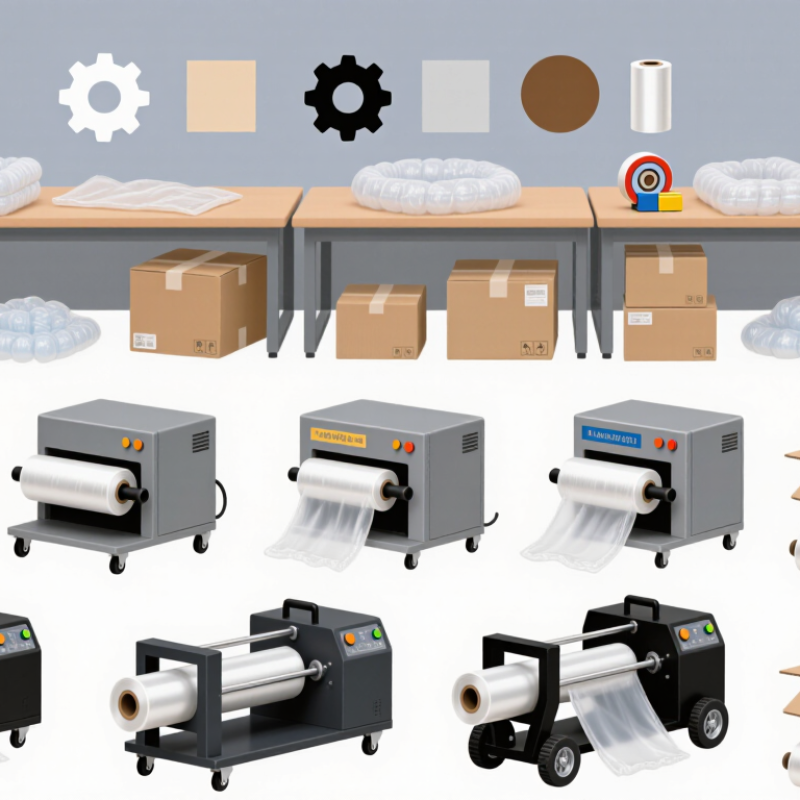
Seven air cushion machines for packaging in 2026 serve different packing conditions, rather than one universal need. A compact tabletop model suits a small dispatch bench with limited storage. A portable unit helps teams move between packing stations. A high-output machine can support steady parcel volumes, but its speed matters only when staff can keep film loaded and parcels moving.
A multi-lane model produces several cushions at once, which may help during busy shifts. An on-demand machine creates cushions as orders arrive and can reduce the need to store bulky prefilled material. A film-flexible unit accepts different cushion formats, though operators should verify compatibility before buying. An integrated packing-line machine can connect production with conveyor workflows. It needs careful setup.
Look closely at the details. Check output rate, supported film widths, loading steps, noise, and routine maintenance. In a real packing area, a machine that is difficult to reload can slow work despite impressive specifications. Test it with the actual cartons and products you ship; a cushion that looks adequate on a screen may shift during handling. I would not choose by speed alone. A little uncertainty remains until the setup is tested.
How the Featured Machines Compare Across Key Specifications
A useful comparison of seven air cushion machines starts with output, not headline speed. Check the stated film width, cushion format, and production rate, then ask how those figures were measured. A machine rated for rapid output may still slow down during frequent size changes. Small differences matter.
Film compatibility affects both cost and daily workflow. Some machines support several film widths or cushion styles; others are more limited. Confirm whether the unit accepts the materials your operation already uses. Also compare roll loading, seal consistency, and access to routine maintenance points. A jam near a cramped feed path can interrupt packing at the worst moment.
Controls deserve a close look. Clear settings and repeatable temperature adjustments help operators produce cushions with fewer rejects. Warm-up time, noise, machine footprint, and power requirements can matter in a busy packing area. Not every specification is reported consistently. That gap matters. Ask suppliers for test conditions, and run sample film before choosing. A short trial can reveal uneven seals or awkward loading that a comparison chart may not show. Capacity figures are useful, but real performance depends on film, settings, and operator habits.
7 Best Air Cushion Machines for Packaging in 2026 — How the Featured Machines Compare Across Key Specifications
| Machine Type | Typical Rated Film Speed | Common Film Width | Typical Power Supply | Best Suited For | Key Advantage | Main Trade-Off |
|---|---|---|---|---|---|---|
| Compact Tabletop Unit | About 8–12 m/min | Typically 200–300 mm | Usually 100–240 V AC | Low-volume packing benches and small online stores | Small footprint and straightforward setup | Lower output makes it less suitable for sustained peak periods |
| General-Purpose Desktop Unit | About 12–20 m/min | Typically 200–400 mm | Usually 100–240 V AC | Small-to-medium fulfillment operations | Balances work rate, size, and film-format flexibility | May need frequent film-roll changes in busy operations |
| High-Speed Single-Lane Unit | About 20–30 m/min | Typically 200–400 mm | Often 200–240 V AC; check the machine rating | Medium-volume packing areas with steady demand | Higher output from a single film lane | Requires adequate workspace and consistent operator supply |
| Multi-Format Production Unit | About 10–25 m/min, depending on film and format | Varies by supported film format; commonly up to about 400 mm | Varies by configuration; commonly 100–240 V AC | Sites that use multiple pillow or cushion film formats | Can reduce the need for separate machines for different formats | Format changes and setup may add operating steps |
| Portable Packing-Station Unit | About 8–15 m/min | Typically 200–300 mm | Usually 100–240 V AC | Flexible packing stations and operations with changing layouts | Easy to reposition near the packing task | Usually offers fewer high-output features than production units |
| Modular Industrial Unit | About 20–30 m/min or more, depending on configuration | Varies by machine and film specification | Check the machine’s rated voltage and electrical requirements | Large fulfillment sites and continuous packing workflows | Can be configured for integration with a wider packaging line | Higher space, setup, and integration requirements |
| Integrated-Line Air Cushion System | Set by the system configuration and line speed | Selected to match the machine and packaging process | Specified for the complete line installation | Automated or semi-automated packaging lines | Can coordinate air-cushion production with other packing equipment | Compatibility and installation planning are essential |
FAQS
A compact tabletop model fits limited storage and a small dispatch area. Check its footprint beside cartons and film rolls.
It helps teams move between packing stations. That can reduce walking, though repeated relocation may interrupt work.
No. Staff must keep film loaded and parcels moving. Fast output alone is not enough.
It can produce several cushions at once, which may help during busy shifts. The benefit depends on steady order flow.
It makes cushions as orders arrive and may reduce stored, bulky prefilled material. Less clutter, sometimes.
Confirm supported widths and cushion formats before purchase. Test the actual film; listed compatibility can leave questions.
Check loading steps, seal consistency, noise, warm-up time, and maintenance access. Run sample film with real cartons.
Ask how output figures were measured, then test settings with normal operators. Charts help, but I would not fully trust them alone.


